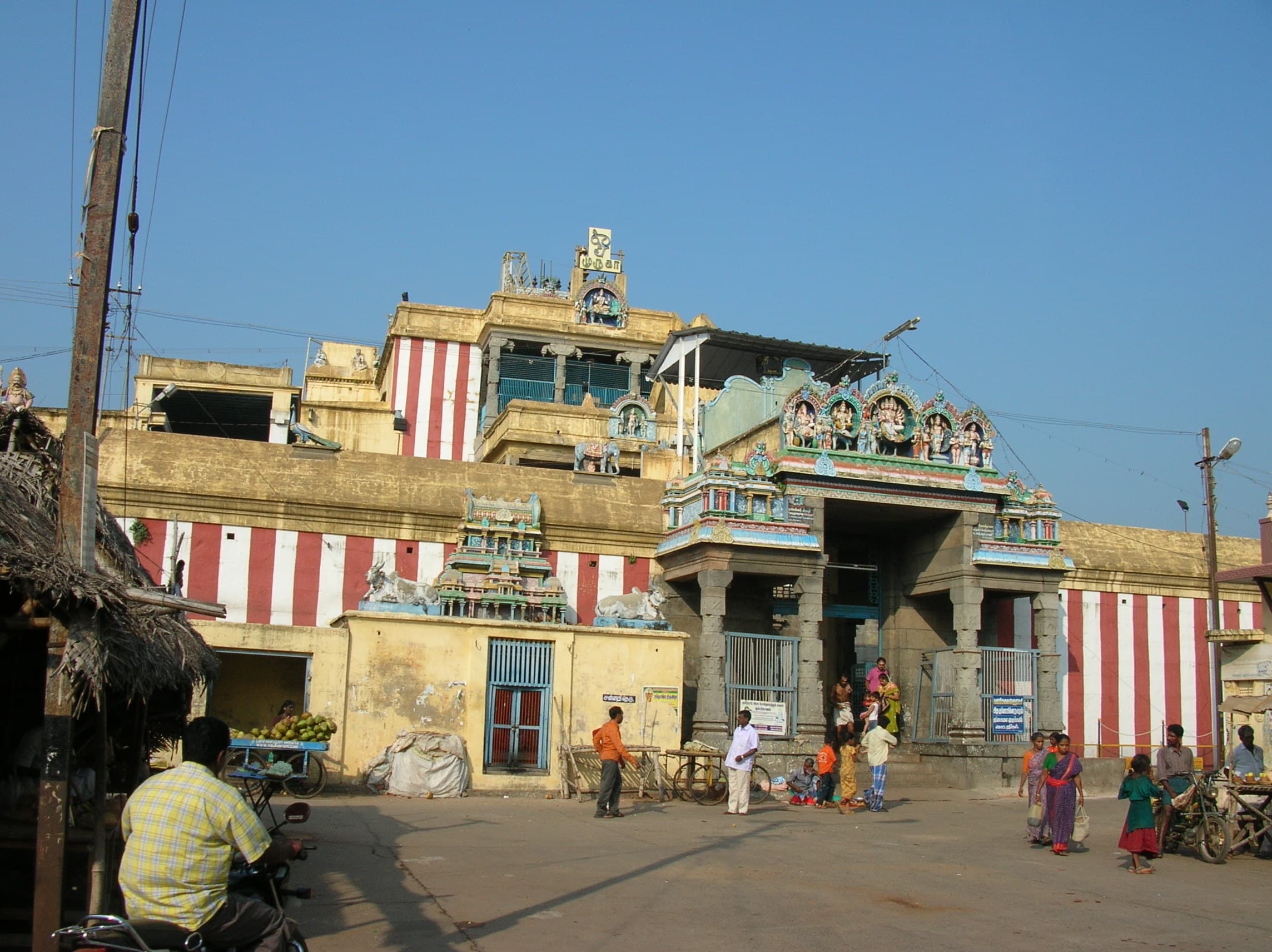
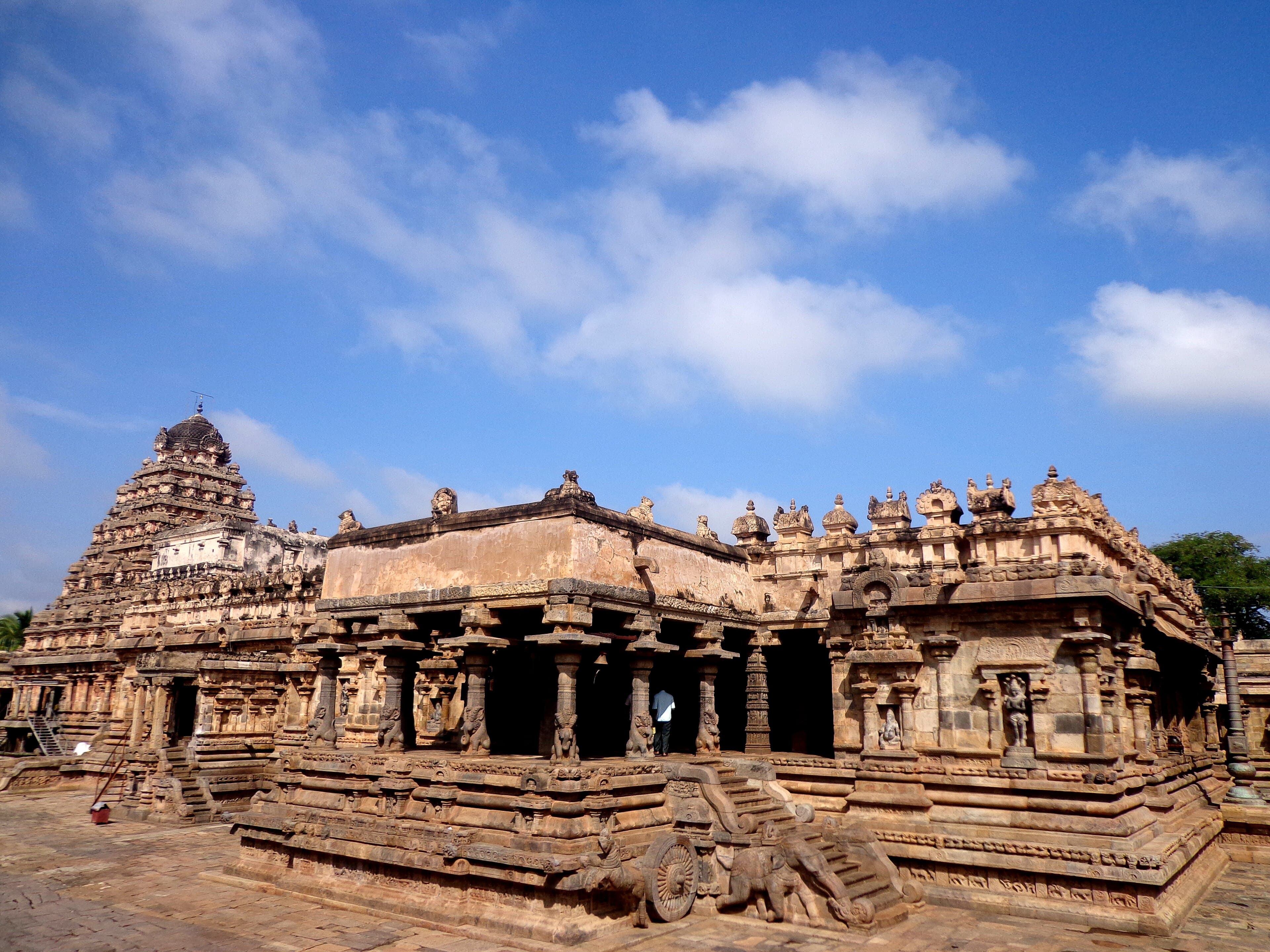
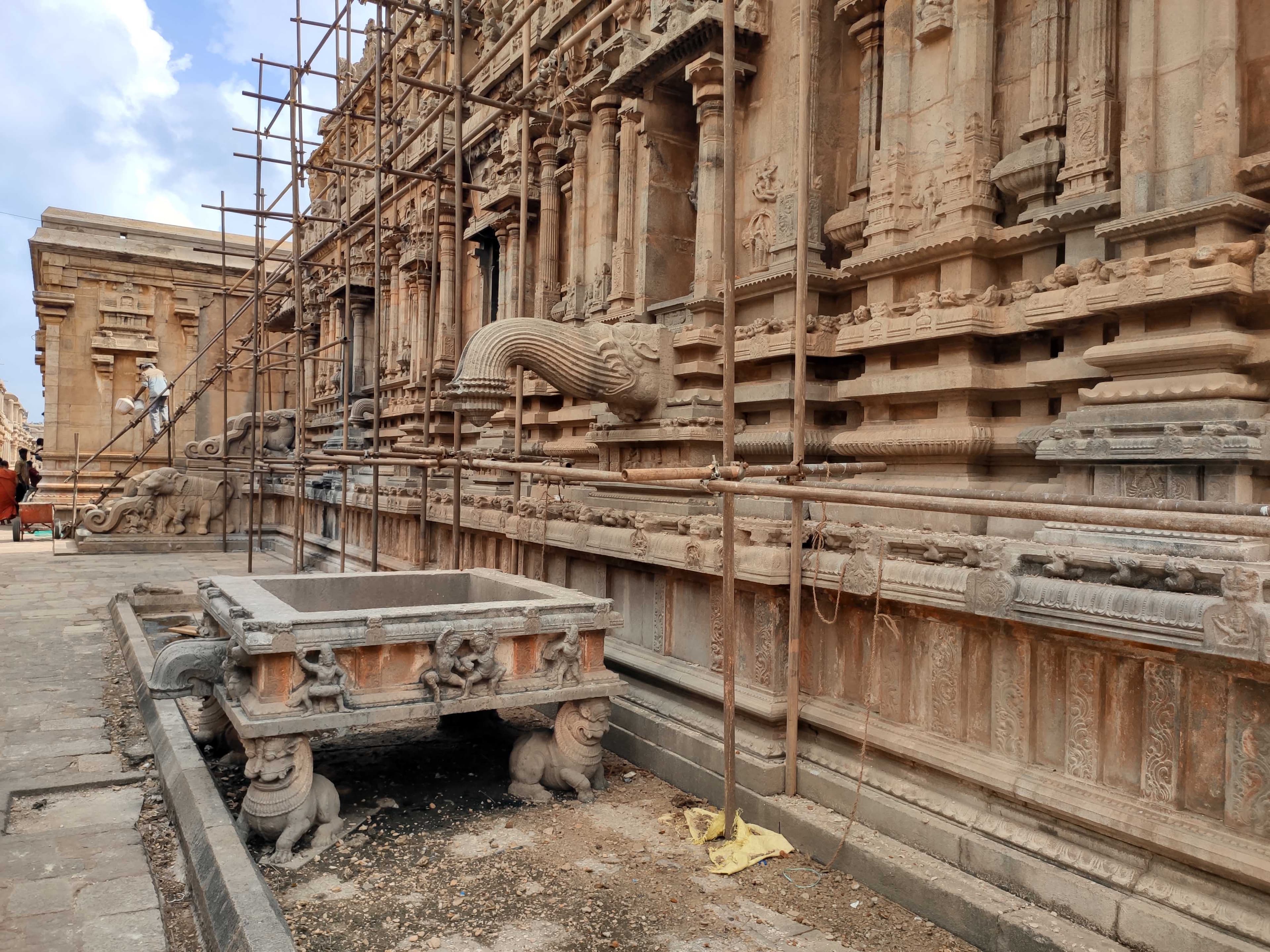
 Photo: Wikimedia Commons / CC BYCurrently Closed
Brihadeeswarar Temple
Type
Hindu Temple
Deity
Lord Shiva
Pincode
613007
A UNESCO World Heritage Chola-era temple built by Raja Raja Chola I and completed around 1010 CE, crowned by a 66-metre vimana capped with a single granite block weighing an estimated 80 tonnes. Dedicated to Lord Shiva, it remains a masterpiece of Dravidian architecture and Chola engineering.
History & Significance
Significance
Brihadeeswarar Temple at Thanjavur, also called the 'Big Temple' (Peruvudaiyar Kovil), is one of the greatest achievements of Dravidian architecture and a UNESCO World Heritage Site. Built by Raja Raja Chola I in 1010 CE, it was the largest temple in India at the time of its completion and remains one of the finest examples of South Indian temple architecture in the world.
History
The temple was commissioned by the great Chola emperor Raja Raja Chola I (985–1014 CE) and completed in 1010 CE — exactly 1,000 years of the Chola empire's golden age. The emperor himself donated extensively to the temple and is said to have overseen its construction personally. The temple served as the royal temple of the Chola empire and received lavish endowments of land, gold, and elephants. Later, the Maratha rulers of Thanjavur maintained and added to the complex.
Raja Raja Chola I is said to have received a vision of Lord Shiva at the spot where the temple now stands. The shadow of the main vimana (tower) is designed never to fall on the ground — a remarkable architectural achievement that has been validated by modern engineers. The bronze Nandi (bull) in the forecourt is one of the largest monolithic Nandi statues in South India.
Architecture
The main vimana (tower over the sanctum) rises to 66 metres — the tallest in South India and one of the tallest temple towers in the world. The capstone at the top weighs approximately 80 tonnes and was reportedly hauled up a ramp 6.44 km long. The temple is built entirely of granite, which was transported from Tiruvalam quarries 50 km away. The Nandi (Shiva's bull) in the forecourt is carved from a single rock. The walls are covered in exquisite Chola-period frescoes (partially hidden beneath later Nayak-period paintings).
Nearby Temples
Closest temples by distance — worth combining into the same trip.