By Deity
By State
60 temples across South India.
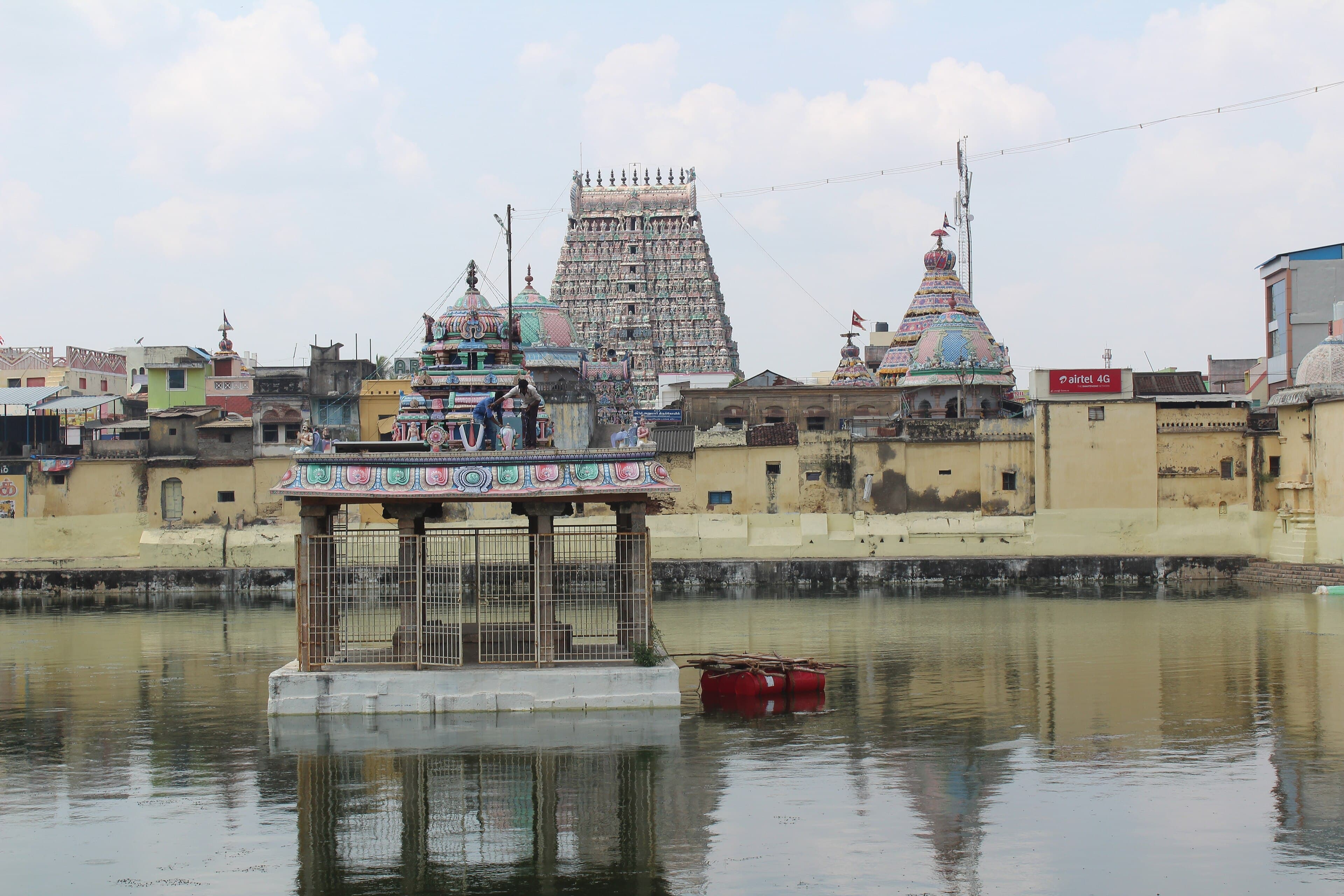
The principal Shiva temple of Kumbakonam and one of the most important in Tamil Nadu. Lord Kumbeswarar (Shiva who formed the universe from a 'kumba'/pot of nectar) is worshipped here. During the rare Mahamaham festival (once in 12 years), lakhs bathe in the sacred Mahamaham tank adjacent to the temple — the largest religious gathering in Tamil Nadu.
Shiva
A major Shiva temple on the banks of the Vasistha Godavari where the Shivalingam is white as milk (ksheera = milk). One of the Pancharama Kshetras cluster temples; receives lakhs on Mahashivaratri. The temple's location amid paddy fields and river delta is serene.
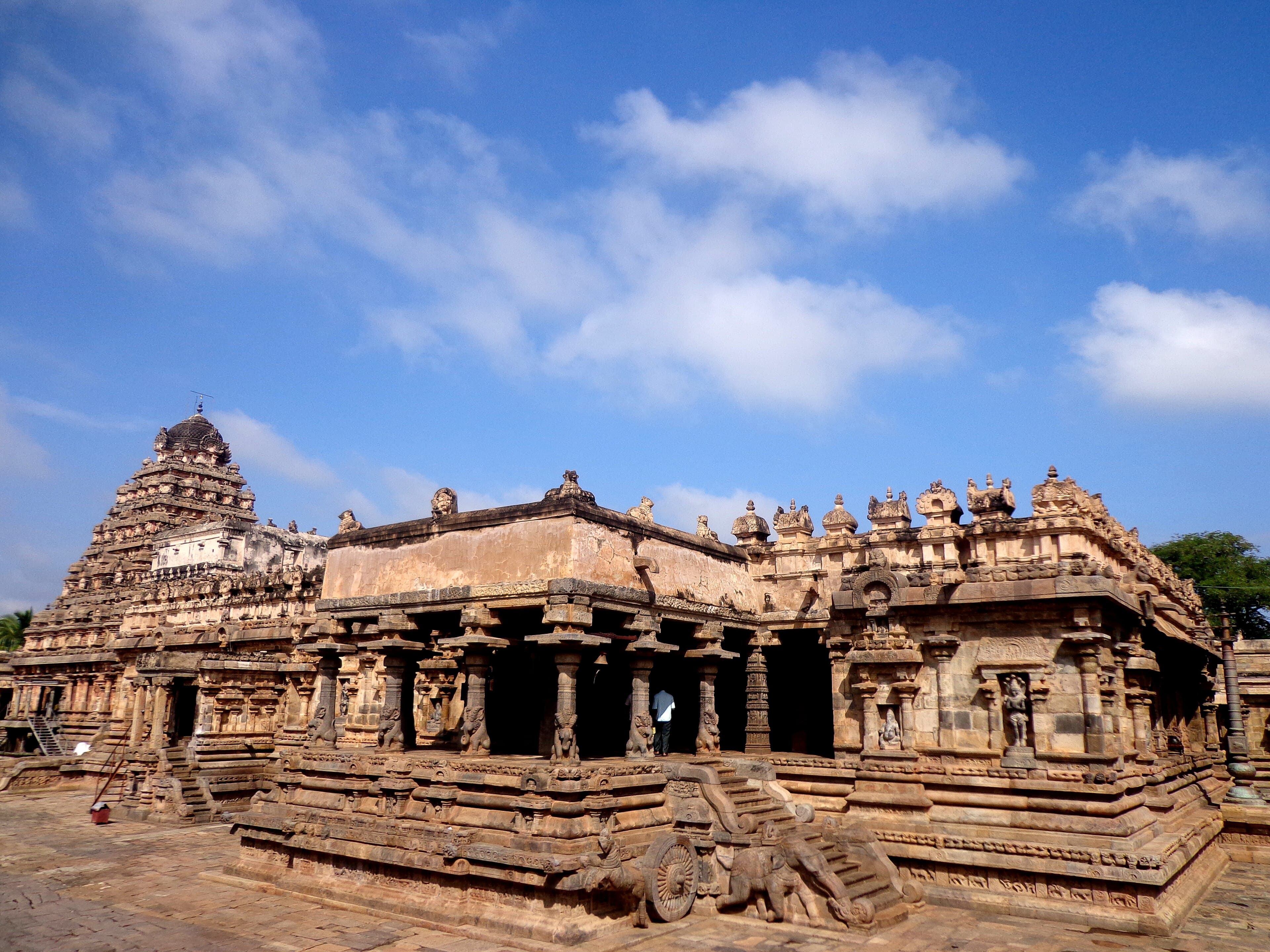
A UNESCO World Heritage Site (Great Living Chola Temples group) built by Raja Raja Chola II in the 12th century CE. Lord Airavateswara (Shiva worshipped by Airavata, Indra's white elephant) is enshrined here. The temple's 'chariot steps' carved to look like a stone chariot and the extraordinary sculptures of Yama, the god of death, are extraordinary.
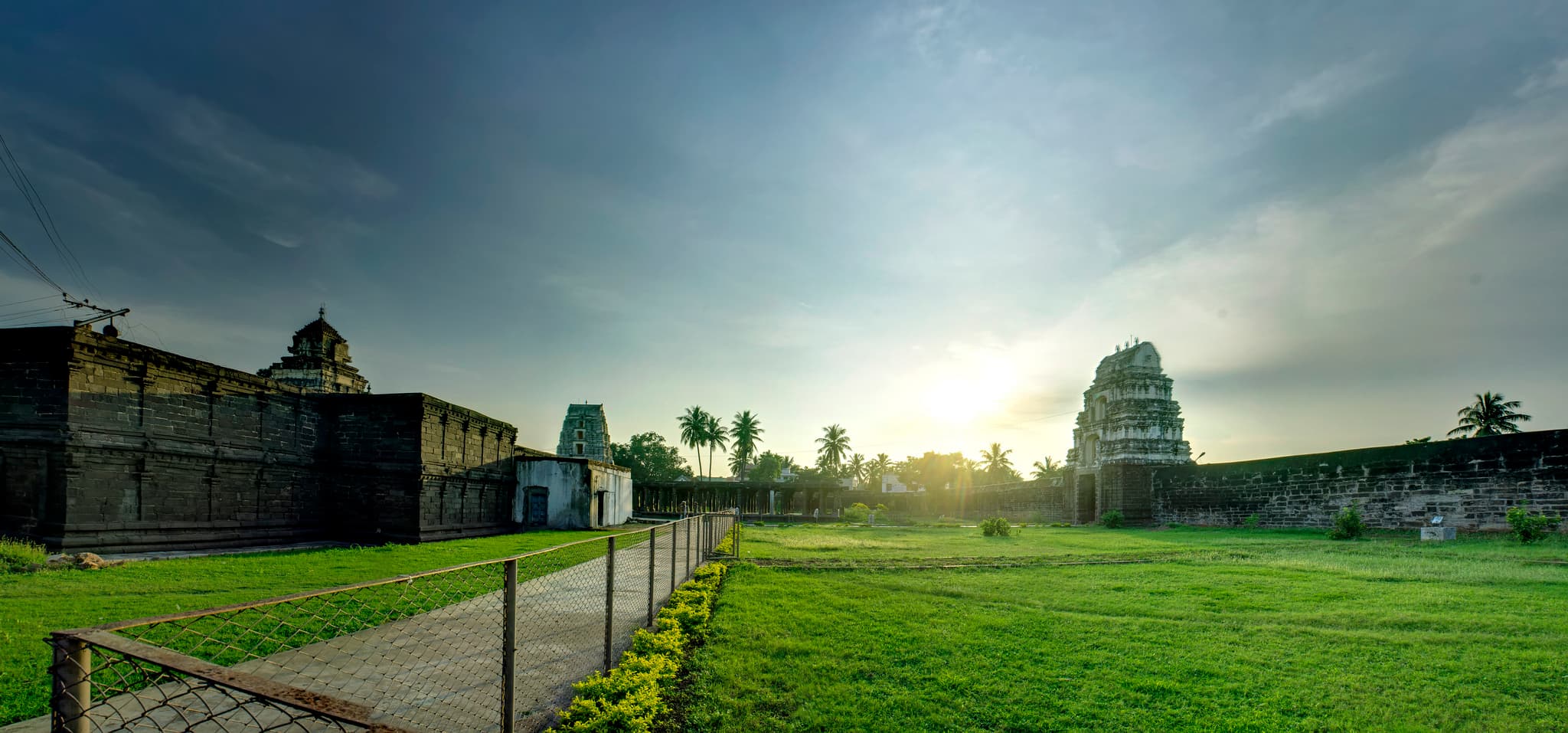
A group of nine 7th-8th century CE Chalukya temples on the bank of the Tungabhadra — each dedicated to a different form of Brahma (though Shiva is the principal deity in each). One of the most historically significant temple complexes in the Deccan. The site also has an ancient Jogulamba Devi temple (Shakti Peetha).
The Jupiter (Guru/Brihaspati) Navagraha temple near Kumbakonam, where Lord Apatsahayeswara (Shiva who protects from calamity) is the presiding deity. Worshipping here on Thursdays (Jupiter's day) is believed to enhance wisdom, education, fortune, and spiritual growth. The temple tank is called Brahma Theertham.
The ancient Amaravathi site on the Krishna river is both a Buddhist Maha Stupa (2nd century BCE) and the location of the Amareswara (Shiva) Pancharama Kshetra. The Archaeological Museum here houses some of the finest Buddhist sculptures in Asia. A dual heritage of Buddhist and Hindu significance.
The principal Pancharama shrine, dedicated to Lord Amareswara (Shiva), in the historic city of Amaravati on the banks of the Krishna River. Amaravati was once the capital of the ancient Satavahana dynasty and a major Buddhist centre, and the temple today stands beside the ruins of the Amaravati Stupa.
A vast Shiva temple at the foot of Arunachala hill, revered as the 'Agni' (fire) shrine among the Pancha Bhoota Sthalams. Its towering gopuram is among the tallest in India, and the temple hosts Karthigai Deepam, when a giant flame is lit atop the hill and remains visible for miles.
Jupiter (Guru) Navagraha temple. The Guru (Jupiter) Navagraha temple at Azhagaputhur, dedicated to Brihaspati — worshipping here is believed to enhance wisdom, education and prosperity.
A group of four remarkable cave temples (3 Hindu + 1 Jain) carved into red sandstone cliffs by the Chalukya kings (6th century CE). Cave 3 contains a stunning 18-armed Vishnu Trivikrama sculpture. A UNESCO World Heritage Site and one of the finest examples of early Deccan rock-cut architecture.
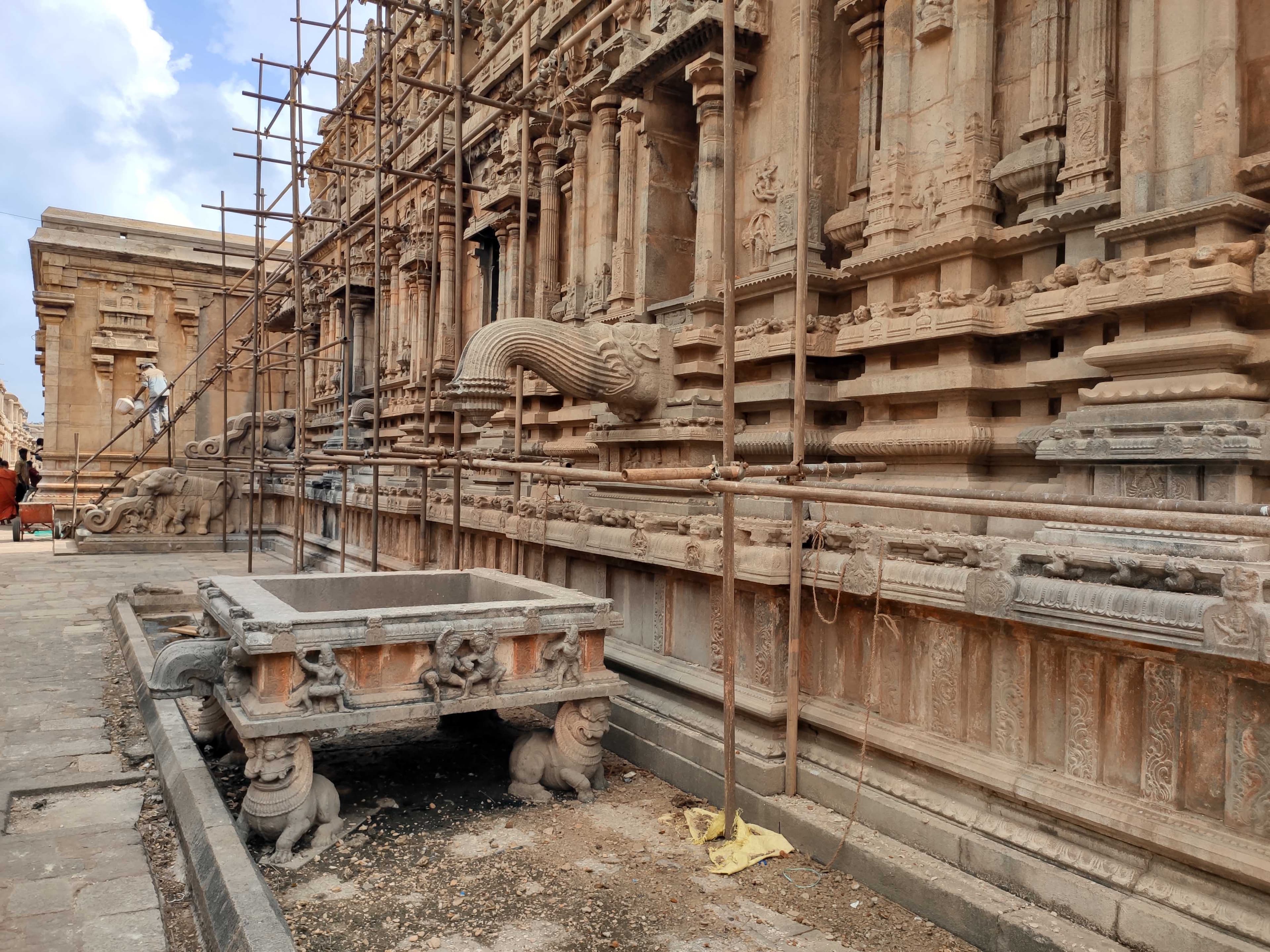
A UNESCO World Heritage Chola-era temple built by Raja Raja Chola I and completed around 1010 CE, crowned by a 66-metre vimana capped with a single granite block weighing an estimated 80 tonnes. Dedicated to Lord Shiva, it remains a masterpiece of Dravidian architecture and Chola engineering.
A Shiva temple at Tadipatri famous for its remarkable 15th-century Vijayanagara architecture — particularly the Gopura (entrance tower) with extraordinary miniature carvings. The 'bugga' (natural spring) within the temple premises is considered sacred. The temple's Alankara Mantapa has some of the finest stone carvings in Andhra.
A famous Bangalore temple housing one of the largest monolithic Nandi (Shiva's sacred bull) statues in the world — 4.5 metres tall and 6 metres long, carved from a single granite rock. Built by Kempe Gowda I (founder of Bangalore) in the 16th century. The annual Kadalekayi Parishe (groundnut fair) here is one of Bangalore's most beloved folk festivals.
A dual temple complex (Shiva and Parvati) where a rare biological miracle is said to occur — the Goddess Bhagavathy is believed to menstruate monthly (evidenced by periodic reddening of the deity's garments), making this a unique fertility shrine. The annual festival during this occurrence draws lakhs of devotees.
One of the Pancharama Kshetras, dedicated to Lord Bhimeshwara (Shiva), renowned for its intricate Chalukya-style stone carvings and towering gopuram. It also enshrines the goddess Manikyamba, one of the eighteen Shakti Peethas, giving it dual Shaiva and Shakta significance.
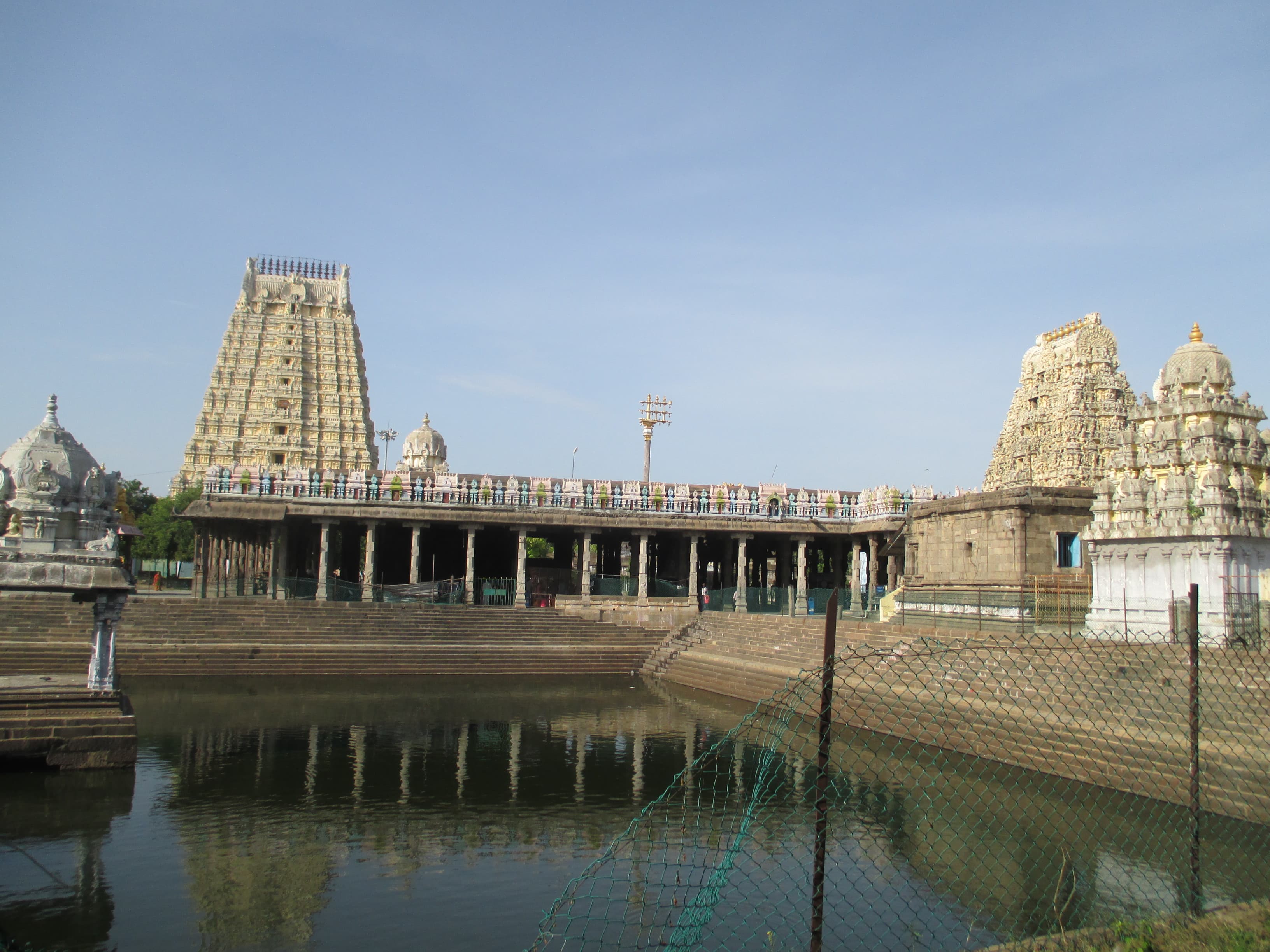
The 'Prithvi' (earth) Pancha Bhoota Sthalam, dedicated to Lord Shiva as Ekambareswarar, in the temple town of Kanchipuram. Its 58-metre gopuram is among the tallest in Tamil Nadu, and its ancient mango tree — said to be over 3,500 years old — is revered as the spot where Parvati is believed to have worshipped Shiva.
One of the most important Shiva temples in Kerala, famous for its stunning golden flagpole and the richly illustrated murals inside the sanctum — depicting Shiva's cosmic dance (Nataraja) in vivid detail. The annual Ettumanoor Ezharaponnana (seven-and-a-half elephant procession) is a spectacular cultural event.
A UNESCO World Heritage Site built by Rajendra Chola I (1025 CE) to celebrate his conquest of the Ganges. A twin to Thanjavur's Big Temple but with a unique curved vimana (tower) — the only example in South Indian temple architecture. The Nandi (Shiva's bull) here is the largest in Tamil Nadu.
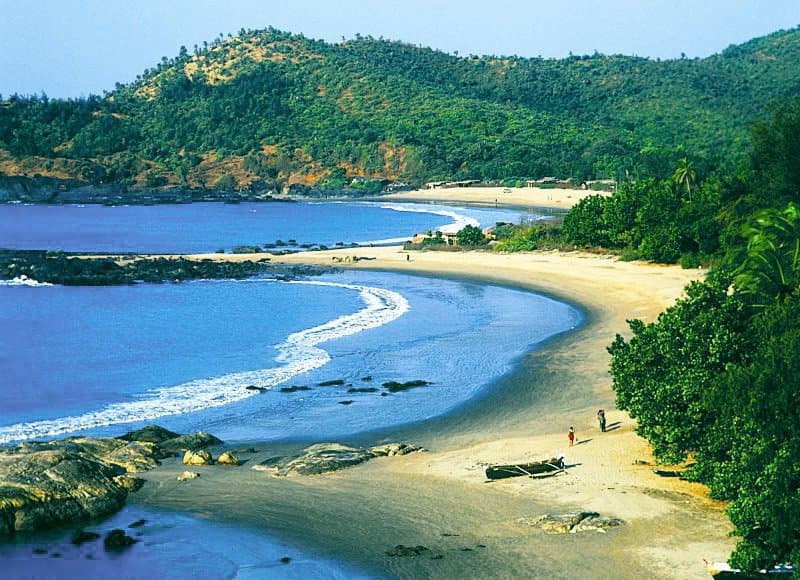
One of the seven Mukti Kshetras of India (sacred liberation sites), dedicated to Lord Mahabaleshwara (Great Shiva). The Atmalinga (Shiva's soul-lingam brought by Ravana) is the most sacred object here — Ganesha tricked Ravana into placing it here permanently. A major pilgrimage centre where devotees take a ritual bath in the sea before worshipping.
One of the oldest Shiva temples in India, housing an extraordinarily ancient Shivalinga (estimated 3rd century BCE to 1st century CE) — carved from solid granite with Shiva standing atop the water demon Apasmarapurusha. The lingam's artistry is considered the highest point of early Indian sculpture.
The largest Hoysala temple, dedicated to Lord Shiva as Hoysaleshwara and Shanthhaleshwara. The entire outer wall is covered with an extraordinary 240-metre frieze of animals, mythological scenes, and intricate carvings. A UNESCO World Heritage Site (2023) just 16 km from Belur.
A 13th-century Kakatiya-era Shiva temple at Jainath in tribal Adilabad district, exhibiting the same decorative richness as Ramappa Temple. Lord Someshwara (Shiva as the moon-lord) is enshrined here. One of the finest examples of Kakatiya temple architecture in north Telangana, relatively undiscovered.
The 'Apas' (water) Pancha Bhoota Sthalam, where a natural spring in the sanctum keeps the Shiva lingam partially submerged despite being underground. Located near Srirangam and dedicated to Shiva as Jambukeswarar and his consort Akhilandeswari, it is one of the few shrines where the goddess holds greater prominence than the god.
One of the oldest temples in Mangalore (9th century CE), built by the Alupa dynasty. Houses the largest bronze idol of Lokeshwara (Avalokitesvara) in India — a 5-foot Buddhist bronze from the 10th century CE, indicating the temple's Buddhist origins. The Nath Panth tradition of tantra yoga has its roots here.
Venus (Shukra) Navagraha temple. The Shukra (Venus) Navagraha temple at Kanjanur, one of the rarest — Venus is the presiding deity here rather than a subordinate planet.
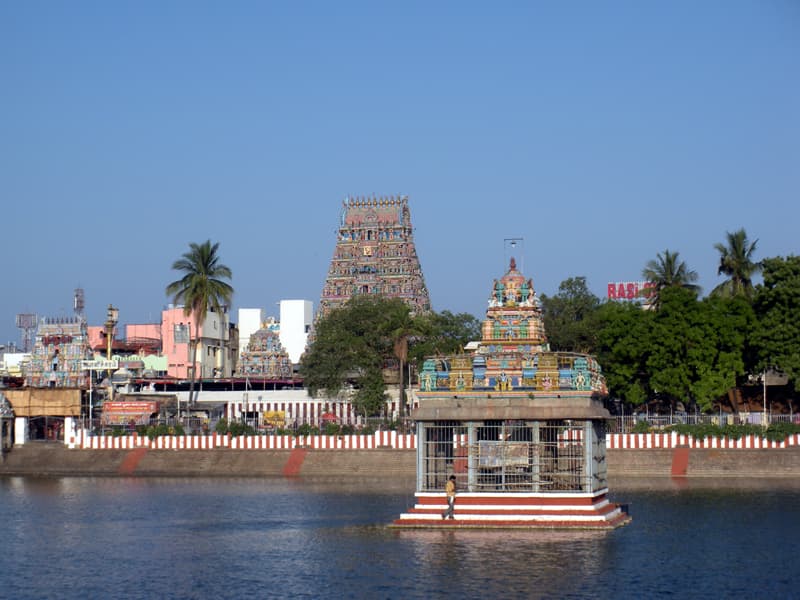
The most important Shiva temple in Chennai, located in the ancient neighbourhood of Mylapore. The colourful 37-metre gopuram is a Chennai landmark. The temple is associated with the legend of Parvati worshipping Shiva in the form of a peacock (mayil).
A Shiva temple at the base of the Tirumala Hills where a natural waterfall (the only waterfall on the Tirumala range) cascades into a sacred tank. Sage Kapila is said to have worshipped Shiva here. Many Tirupati pilgrims bathe here before ascending Tirumala.
An ancient Shiva temple near Kurnool on the Tungabhadra river bank, where a sacred waterfall (Kapila Theertham) flows alongside the sanctum. Pilgrims bathe in the waterfall before worshipping. Important on the Kurnool–Mantralayam pilgrim circuit.
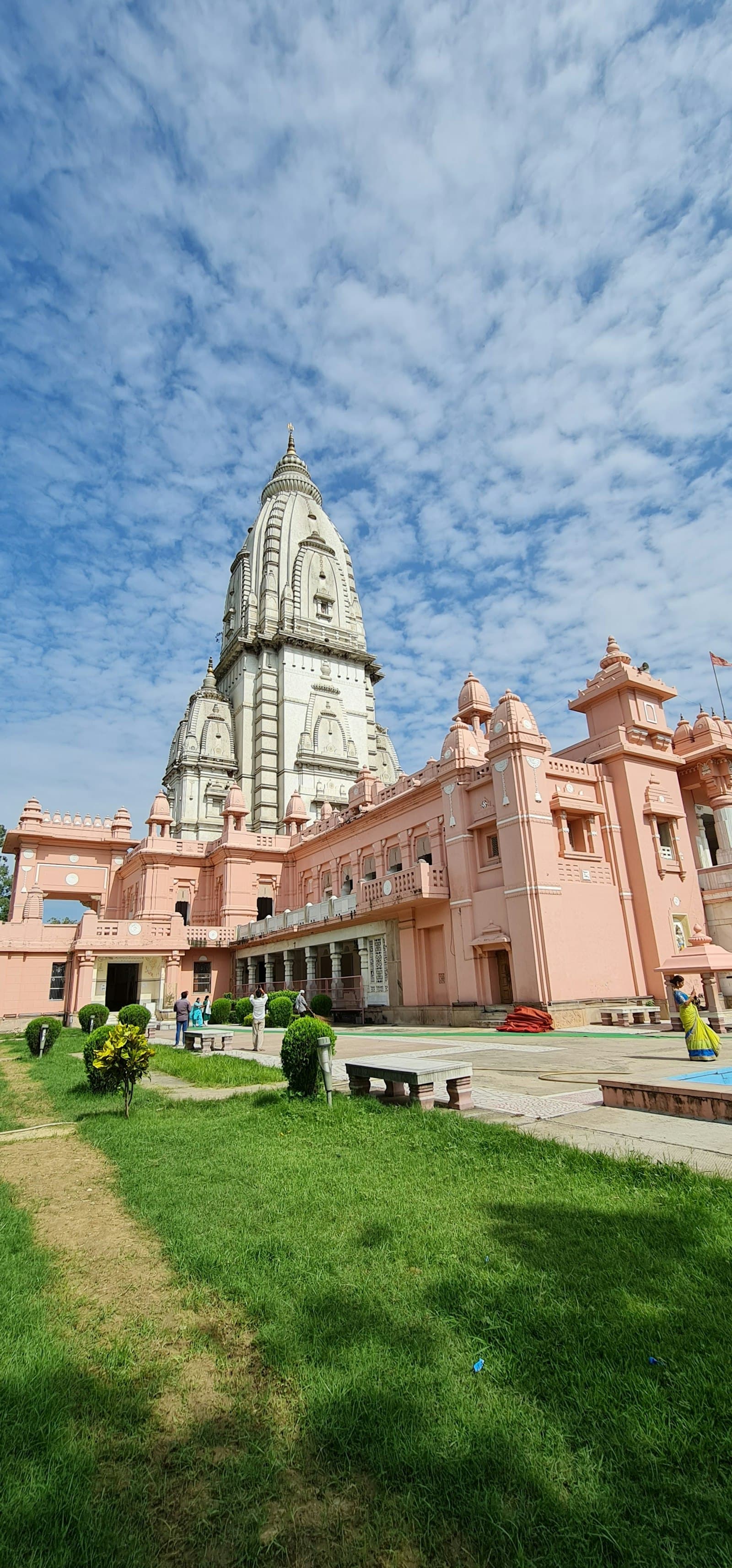
One of the twelve Jyotirlinga shrines of Lord Shiva, on the banks of the Ganges in Varanasi — among the holiest sites in Hinduism. The current temple was rebuilt in 1780 by Ahilyabai Holkar, its dome later gilded with gold donated by Maharaja Ranjit Singh, and it now connects directly to the river via the Kashi Vishwanath Corridor.
Called the 'Kashi of the South' — a Shiva temple housing the same lingam forms as the great Kashi Vishwanath in Varanasi. Built by the Pandya king Parakrama Pandian in the 15th century, it is architecturally splendid with a 6-tier gopuram. Located 7 km from Courtallam.
An ancient Shiva temple in the former Chola port city of Nagapattinam, where Shiva is worshipped as Kayarohanaswamy (one who rode a shark). Glorified by all three major Saivite poets (Appar, Sambandhar, Sundarar). The Nilayatakshi Amman shrine here is especially sacred.
A Jyotirlinga shrine of Lord Shiva and one of the four Char Dham pilgrimage sites, set above 3,500 metres in the Himalayas. Legend attributes its founding to the Pandavas, and the temple — reached only by a roughly 16-km trek and open a few months each year due to snow — survived the devastating 2013 Uttarakhand floods largely intact.
A highly popular Shiva temple on a small rocky hill 40 km from Hyderabad on the Karimnagar highway. Receives 1-2 lakh pilgrims on Mahashivaratri alone. The temple is set amidst natural rock formations with a stream and is surrounded by mango groves. One of the most-visited temples near Hyderabad.
Ketu Navagraha temple. The Ketu Navagraha temple, collocated near Keezhperumpallam, representing the lunar descending node — completing the Navagraha circuit.
Rahu Navagraha temple. The Rahu Navagraha temple at Keezhperumpallam, dedicated to the lunar ascending node, known for removing malefic Rahu effects in one's horoscope.
A highly revered Telangana folk deity temple — Lord Mallanna (a form of Shiva, also called Shiva Bhakta Shiva) is unique to Telangana's tradition. Receives one of the largest pilgrim gatherings in Telangana during the annual Komuravelli Mallanna festival (Sivarathri). Located 40 km from Hyderabad.
A dramatic hilltop Shiva temple on three rocky peaks (Trikuta hills) near Narasaraopet. Lord Trikoteswara (Shiva of three peaks) is enshrined here. The three hills represent the three eyes of Shiva. Famous for the Shivaratri festival when lakhs of pilgrims climb the 700 steps to seek blessings.
A historic Shiva temple near the Godavari river, associated with one of the Pancharama cluster. Lord Bhimeshwara is enshrined here on the scenic banks. During the Godavari Pushkaralu (once in 12 years), Kotipalli receives millions of pilgrims.
A unique forest Shiva temple that is accessible only during a 28-day annual festival (Vysakha Mahotsavam, May–June). For the rest of the year, the temple is closed and the forest takes over. The festival draws 5–7 lakh pilgrims who trek through the Wayanad forests and bathe in the sacred Bavali river. There is no permanent structure — offerings are made at a rock in the open air.
The Pancharama Ksheerarama shrine, where the Shiva lingam is believed to have emerged from a pot of milk (ksheera) during the splitting of a cosmic lingam by Vishnu's discus. Set amid the paddy fields of the Godavari delta, it also houses a shrine to Parvati as Ksheera Rameswari.
The birthplace of Basavanna (1131–1196 CE) — the great saint-philosopher who founded the Lingayat tradition and campaigned against caste discrimination. Located at the confluence of the Krishna and Malaprabha rivers. The Basavanna samadhi (shrine) here is the most sacred site for 10 million Lingayat devotees worldwide.
One of the most important temples in Mangalore, built by social reformer Narayana Guru in 1912 to provide a temple for all castes. Lord Gokarnanatha (a form of Shiva as Lord of Gokarna) is the presiding deity. The nine-day Navaratri festival here includes spectacular cultural events and draws 5 lakh visitors.
A Pancharama shrine dedicated to Lord Bhimeshwara, one of five temples enshrining a single Shiva lingam said to have been split by Lord Vishnu's discus. It features a 30-metre gopuram and a sacred pond, Kumara Pushkarini, whose waters are believed to have healing properties.
A Shiva temple at the base of the famous Courtallam Waterfalls — devotees bathe in the waterfalls before worshipping. Lord Kutralanathar (Shiva of the waterfalls) and Goddess Kuzhalmalar Ammai preside here. The medicated properties of the waterfall water are renowned.
A major Shiva temple 7 km from Kasaragod town, famous for the beautiful 11th-century Vijayanagara-style architecture and the unique 'Thripady' tradition where worship follows a 3-day cycle. The sacred Madhuvan river flows beside the temple. One of north Kerala's most visited pilgrimage sites.
A major Shiva temple famous for its natural 'Navakundam' — nine sacred springs that flow perpetually around the sanctum and are never known to dry up. Lord Mahanandiswara (Shiva as the great Nandi/bull lord) is the presiding deity. The tank around the temple is fed by these springs.
A Jyotirlinga shrine of Lord Shiva that is also one of the eighteen Shakti Peethas — a rare dual distinction — set on the Nallamala hills overlooking the Krishna River. Its fortified stone walls and sculpted gopuram reflect centuries of patronage from South Indian dynasties, including the Vijayanagara and Reddy kings.
A major Shiva temple 1 km from the famous Guruvayur Krishna Temple, traditionally visited by pilgrims before or after the Guruvayur darshan. Lord Mahadeva here is worshipped as Shiva who witnessed the installation of the Guruvayur idol. The two temples are spiritually and geographically interconnected.
An ancient Shiva temple in the Godavari delta region where Rama is said to have worshipped Shiva (hence Ramalingeswara). Part of the sacred Godavari pilgrimage circuit. The local tradition holds that Rama installed the lingam here during his search for Sita.
A major Shiva temple where the Goddess Parvati took the form of a peacock (mayura) to worship Shiva — hence the town is called Mayiladuthurai (city of the peacock goddess). Praised by the Nayanmars, this is one of the Paadal Petra Sthalams (temples in Thevaram literature).
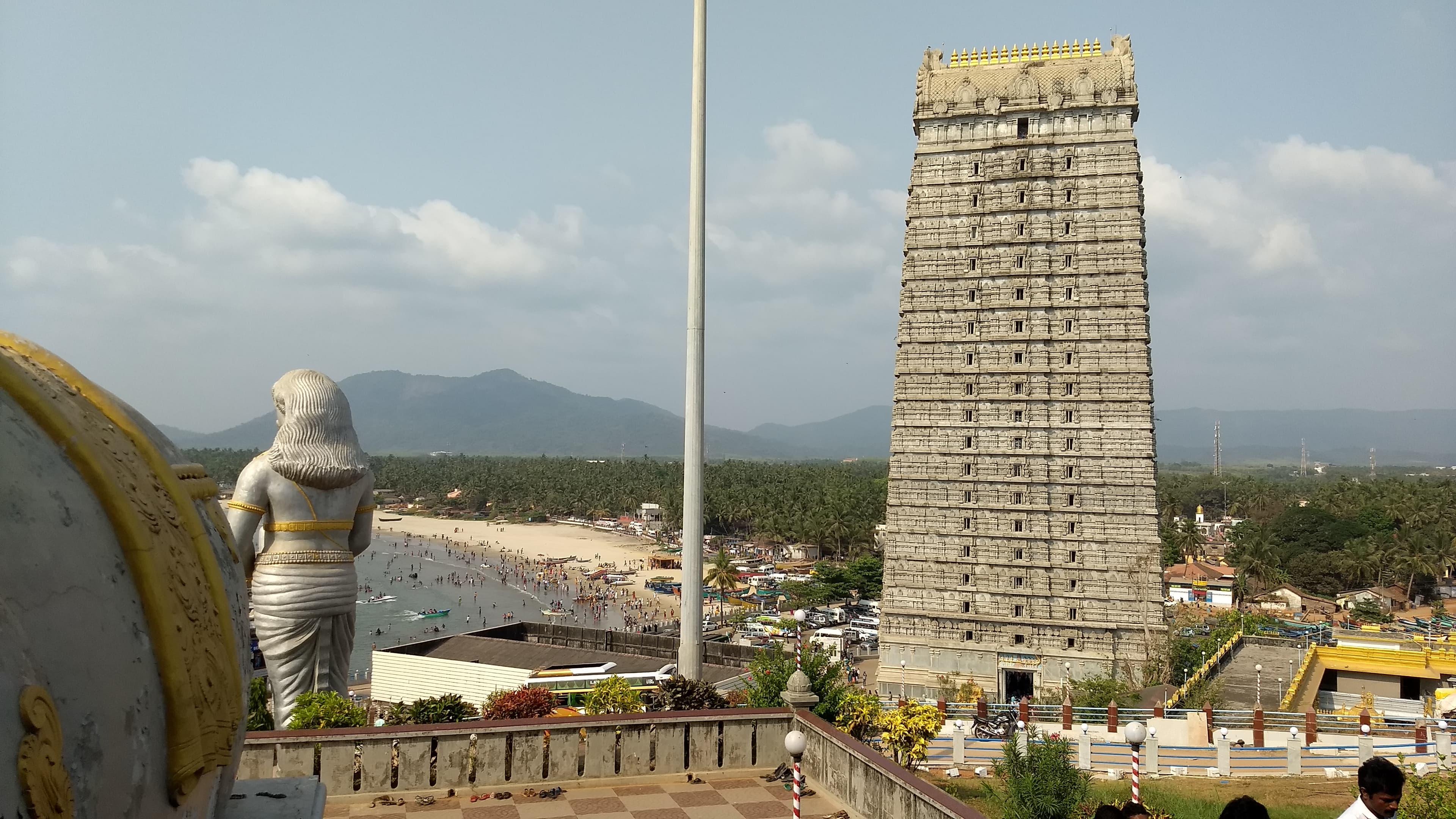
A coastal Shiva temple on the Arabian Sea in Karnataka, overlooked by one of the world's tallest Shiva statues, standing around 123 feet high. Its hilltop location on Kanduka Hill, surrounded by water on three sides, makes it one of the state's most photographed pilgrimage spots.
One of the most important Shiva temples in Karnataka, located on the banks of the Kabini river. Lord Srikanteshwara (Shiva with a blue throat) is the tutelary deity of the Mysuru region. Famous for the Nanjangud Banana (Nanjangud Rasabale), a GI-tagged rare variety of banana grown only near the temple.
The 'Akasha' (space) Pancha Bhoota Sthalam, home to the cosmic dancing Shiva as Nataraja — the only shrine where Shiva is worshipped as pure space rather than a lingam. Its Chit Sabha (hall of consciousness) is roofed with 21,600 gold tiles, said to represent the number of breaths a person takes in a day.
The principal temple of Tirunelveli city, dedicated to Lord Nellaiappar (Shiva as lord of the paddy field) and Goddess Kanthimathi Ambal. Famous for its exceptional golden lily tank (porthamarai kulam) and a musical pillar hall where 48 of the 161 pillars emit musical tones. One of the finest Pandya-era temples in Tamil Nadu.
A UNESCO World Heritage Site with 10 major temples representing the peak of Chalukya architectural achievement (7th–8th century CE). The Virupaksha Temple here (also called Lokeswara) was the model for the Kailasa Temple at Ellora. Pattadakal, Badami, and Aihole together form the 'Cradle of Hindu Architecture'.
One of the twelve Jyotirlinga shrines of Lord Shiva and one of the four Char Dham sites, on the island of Rameshwaram. The temple is famed for its corridor of sculpted pillars — among the longest temple corridors in the world — and its 22 sacred wells (theerthams), which pilgrims traditionally bathe in before darshan.
A UNESCO World Heritage Site (2021) built by Kakatiya general Recherla Rudra in 1213 CE. Named after its chief sculptor Ramappa — one of only two temples in the world named after their architect. Famous for 'floating bricks' (lightweight bricks used in the shikhara), extraordinary wall sculptures of Kakatiyas, and the beautiful lake beside the temple.
A UNESCO World Heritage Site — a 8th-century Pallava-era granite temple complex standing on the shores of the Bay of Bengal. One of the oldest structural stone temples of South India, dedicated to Shiva and Vishnu. The setting at sunset with the sea behind is extraordinary.
A 500-year-old Shaiva Math (monastery) near Tumkur, associated with the late centenarian saint H.H. Sivakumara Swami (1907–2019) who ran a school, college, and free meals for thousands daily. The Math combines education, social service, and Shiva devotion. After the saint's samadhi here, it has become a major pilgrimage.
A 7th-century CE Shiva temple glorified by all four major Nayanmars (Shiva poet-saints) — Thirugnana Sambandhar was born in Sirkazhi. The only temple in the world praised by all four principal Nayanmars. The presiding deity Brahmadesam (Shiva as Lord of Brahma's place) is unique.