By Deity
By State
36 temples across South India.
Narasimha
The foremost shrine of Lord Narasimha in India, where Vishnu is said to have slain the demon Hiranyakashipu to save Prahlada. Nine different forms of Lord Narasimha (Nava Narasimha) are worshipped in nine separate shrines spread across Lower and Upper Ahobilam in the Nallamala forest.
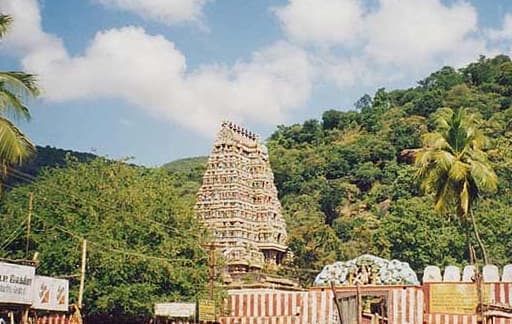
A Divya Desam Vishnu temple on the Alagar Hills, 21 km from Madurai, dedicated to Lord Kallazhagar. It is famous for the Chithirai festival, when the deity is carried down from the hills into the Vaigai river to 'meet' his sister Meenakshi ahead of her temple wedding in Madurai.
Krishna
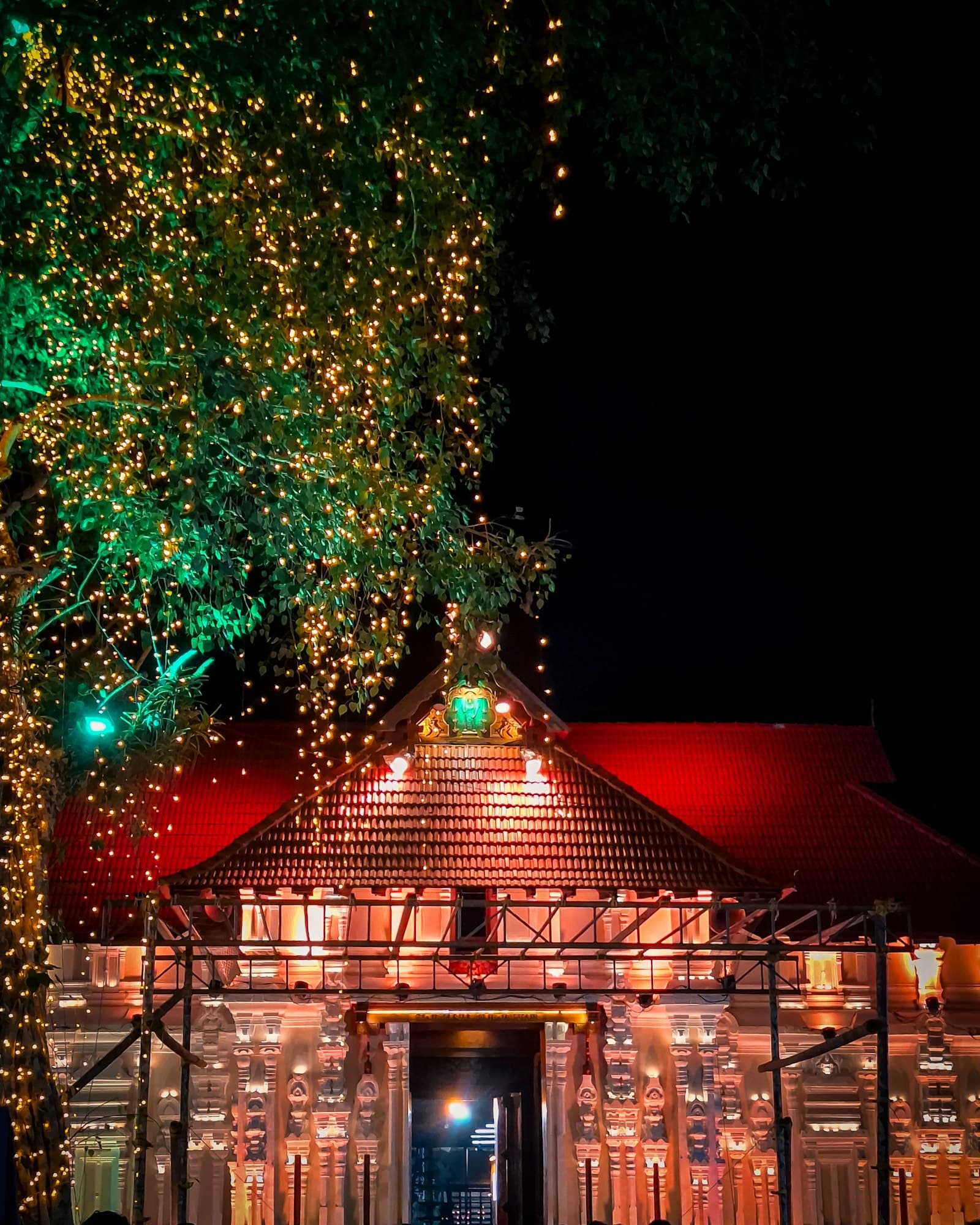
A famous Krishna temple in Alappuzha where legend holds that Lord Krishna himself challenged a chess prodigy and, upon losing, offered himself as a slave. Since then, the temple has served 'paal payasam' (sweet rice pudding) free to all devotees daily — a tradition believed to be over 1,000 years old.
Ranganatha
One of the most visited temples in Andhra Pradesh — Lord Veeravenkata Satyanarayana (Vishnu as the 'eternal truth') is enshrined on the Ratnagiri hill. Famous for the Satyanarayana Swamy Vrata performed here by thousands of devotees daily. Located near the Pampa river.
A Vishnu temple at the confluence of the Vasishta Godavari with the Bay of Bengal — one of the most auspicious sea-river confluences in Andhra Pradesh. The annual Karthika Masam festival draws lakhs of pilgrims. Antarvedi is known as the 'Prayag of the South'.
One of the 108 Divya Desams (Lord Vishnu as Parthasarathy — Krishna as Arjuna's charioteer). Famous for the Aranmula Boat Race (snake boat race on the Pampa river, the oldest in Kerala) and the unique Aranmula Kannadi (metal mirror made only here). Part of the Kerala Ashtamangalam pilgrimage circuit.
A masterpiece of Hoysala architecture (12th century CE) — the Channakeshava Temple at Belur took 103 years to build and features some of the most intricate stone carvings in India. A UNESCO World Heritage Site (2023). The sculpture detail rivals that of Khajuraho.
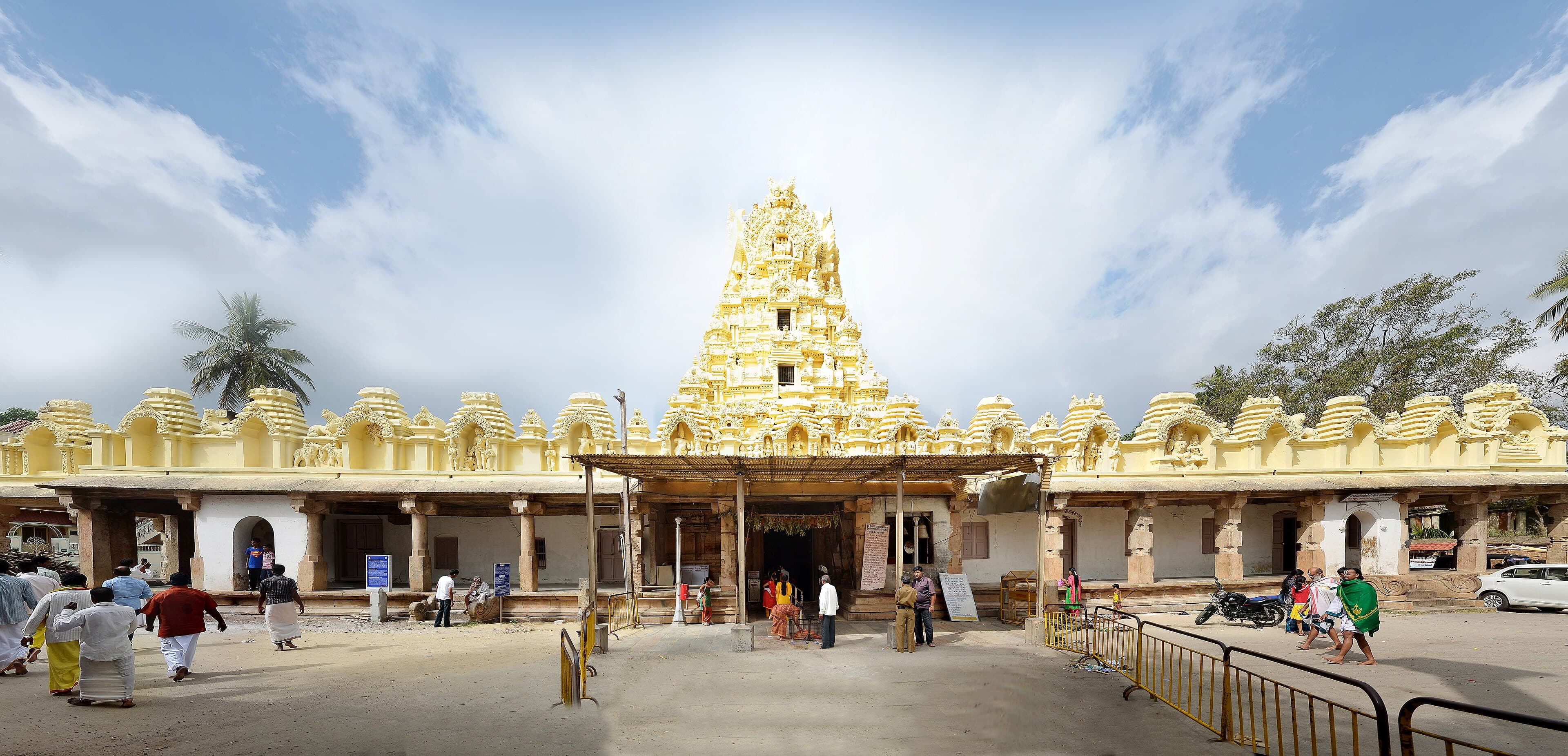
A Vishnu temple in the Biligiri Rangana Hills (BRT) Wildlife Sanctuary at an elevation of 1,700 metres — where the Eastern and Western Ghats meet. 'Biligiri' means 'white rock' in Kannada — the rock formation near the temple glows white in evening light. The scenic hill drive through the tiger reserve is an experience in itself.
Venkateswara
A modern white-marble temple on Naubath Pahad hill overlooking Hyderabad and Hussain Sagar lake, dedicated to Lord Venkateswara. Built by the Birla Foundation and completed in the 1970s, it blends South Indian, Rajasthani, and Odishan architectural styles across its gleaming white-marble structure.
A hilltop Vishnu temple of great spiritual significance to the Sri Vaishnava tradition. Ramanujacharya spent many years here and installed the 'Sampige Narayana' deity. The annual Vairamudi festival, where Lord Cheluvanarayana is adorned with a diamond crown, draws lakhs of pilgrims.
A famous hilltop Narasimha temple on the rocky Devarayadurga hills, 60 km from Bangalore. The 'Bhoga Narasimha' (Lord Narasimha in a benevolent resting posture) and 'Yoga Narasimha' (meditative posture) shrines are on twin hills. The scenic hilltop location with huge boulders and forest is breathtaking.
Called 'Chinna Tirupati' (Small Tirupati), this hilltop Vishnu temple near Eluru is believed to be the spot where Veeravenkata Satyanarayana himself appeared to a devotee. Receives 50,000+ pilgrims on weekends. The climb of 600 steps or the ropeway are both popular.
A revered Krishna temple in Kerala, one of the most visited Vaishnava shrines in South India, where the deity is worshipped as Guruvayurappan. Known as 'Bhuloka Vaikunta' (Vaikuntha on earth), the temple's elephants — housed at the nearby Punnathur Kotta sanctuary — are famous throughout Kerala and take part in its major festivals.
One of the largest ISKCON temples in the world, built on a 7.5-acre hill in Bangalore. The magnificent marble complex houses Sri Radha Krishna, Sri Nitai Gauranga, and Sri Krishna Balarama. A spiritual and cultural centre drawing 10,000+ visitors daily. The Janmashtami celebration here draws 5 lakh people in a single night.
A major Narasimha temple in Anantapur district where Lord Lakshmi Narasimha is in a unique 'sitting on serpent' posture. One of the most visited temples in the Rayalaseema region; receives 50,000+ pilgrims on major festival days. The annual Brahmotsavam (December–January) is spectacular.
One of the 108 Divya Desams — Lord Oppiliappan (Vishnu without blemish) accepts only salt-less food offerings and no Tulsi (holy basil) — unique restrictions found nowhere else. The presiding Goddess Komalavalli (Lakshmi) is said to have manifested here. The temple's beautiful pond and serene atmosphere make it special.
A unique hilltop Narasimha temple where the deity is offered jaggery water (panaka/panakam) instead of milk — the Lord is said to drink the panaka directly and the quantity offered is always consumed. The temple sits atop a conical hill with 1,200 steps; a ropeway is also available.
The oldest active temple in Chennai, dating to the 8th century CE (Pallava period). Lord Parthasarathy (Krishna as Arjuna's charioteer) is one of the only deities who is depicted with battle scars on his face — a unique form seen nowhere else. One of the 108 Divya Desams.
A famous hilltop temple in the Nellore forest, dedicated to Siddha Narasimha Swamy (Narasimha in a meditative/perfected form). The 5 km forest trek and final steep rock climb add to the spiritual experience. During the annual Brahmotsavam, tens of thousands of pilgrims camp in the forest.
One of the 108 Divya Desams and among the largest temple complexes in Tamil Nadu (covering 23 acres). Lord Rajagopalaswamy (Krishna as king of cowherds) presides here with three consorts — Komalavalli, Madhuravaani, and Sridevi. The temple's 11-tier rajagopuram is 59 metres tall.
The largest functioning Hindu temple complex in the world, spanning around 156 acres across seven concentric enclosures and 21 gopurams, and foremost among the 108 Divya Desams of Lord Vishnu. Lord Ranganatha is worshipped here in his reclining form, and the temple's Vaikunta Ekadasi festival draws vast crowds each year.
A famous Vishnu temple where Lord Jagannathaswamy (a form of Krishna/Vishnu) is worshipped with a unique annual tradition — the deity is 'bathed' in the waters of the Godavari river during the Chariot Festival. Pilgrims take a sacred dip at the Ryali Sangamam (river confluence).
One of the tallest gopurams in South India (45 metres, 11 tiers) and the most important Divya Desam in Kumbakonam. Lord Sarangapani (Vishnu holding a bow/sarangu) reclines here in the posture of a patient cured of illness — a rare form of Vishnu.
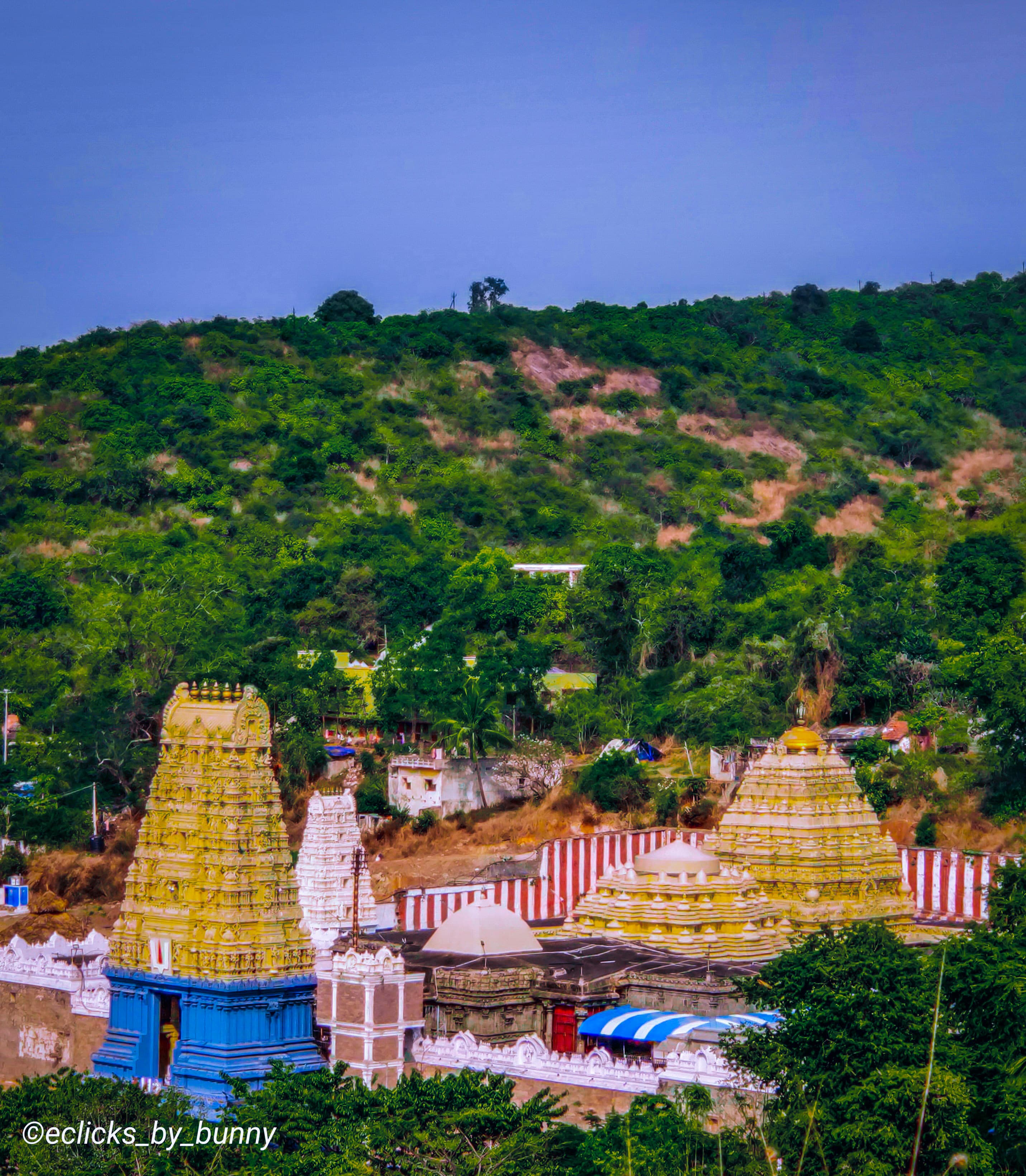
An ancient hilltop temple dedicated to Varaha Narasimha, a combined boar-and-lion form of Lord Vishnu, on Simhachalam hill near Visakhapatnam. The deity is kept covered in sandalwood paste year-round and revealed in its true form only once a year, on Akshaya Tritiya, during the Chandanotsavam festival.
Padmanabha
A historic Vishnu temple in Thiruvananthapuram, where the deity is enshrined in the Anantha Shayanam posture, reclining on the serpent Adishesha. Renowned for its Dravidian gopuram and storied treasure vaults, it has traditionally been the family deity of the former Travancore royal family.
A Vishnu temple on the historic island of Srirangapatna — the former capital of Hyder Ali and Tipu Sultan. Tipu Sultan, despite being Muslim, was a devotee of this temple and gifted it precious jewels. The site also has Tipu's summer palace and the place where he fell in battle (1799).
A modern Lakshmi temple near Vellore with an intricate golden structure, reportedly covered in around 1,500 kg of gold, set within a 100-acre spiritual park landscaped with reflecting pools and gardens. Completed in 2007, it has become one of Tamil Nadu's most visited spiritual and architectural landmarks.
A major Narasimha temple in Krishna district where the deity is worshipped as a swayambhu (self-manifested) form in a cave. One of the 108 Narasimha Kshetras in Andhra Pradesh. The annual Brahmotsavam draws pilgrims from across coastal Andhra.
A Divya Desam Vishnu temple on the banks of the Bharatapuzha river — the site of the historic Mamankam festival held every 12 years (the 'Kumbh Mela of Kerala') where the Zamorin of Kozhikode presided. Lord Navamukunda (Vishnu with nine faces) is rare and unique to this temple.
One of the 108 Divya Desams, built in traditional Kerala style. Lord Sree Vallabha (Vishnu in a seated posture) is enshrined here. The temple elephant Gajendrakshetra is famous. The annual Champakkulam Moolam festival with 70 elephants in procession is a spectacular sight.
The second principal temple of the Thrissur Pooram, competing with Paramekkavu Bhagavathy in the grandest elephant procession in Kerala. The Thiruvambady Sri Krishna's elephant procession and the climactic 'Kudamattam' (umbrella exchange between the two groups) is the centrepiece of Thrissur Pooram festival.
The royal temple of the erstwhile Cochin royal family, dedicated to Lord Poornathrayeesa (Vishnu holding a conch, disc, and mace in all three aspects). The Vrishchikotsavam festival here involves 50+ caparisoned elephants and is one of Kerala's grandest temple festivals. Located 12 km from Kochi.
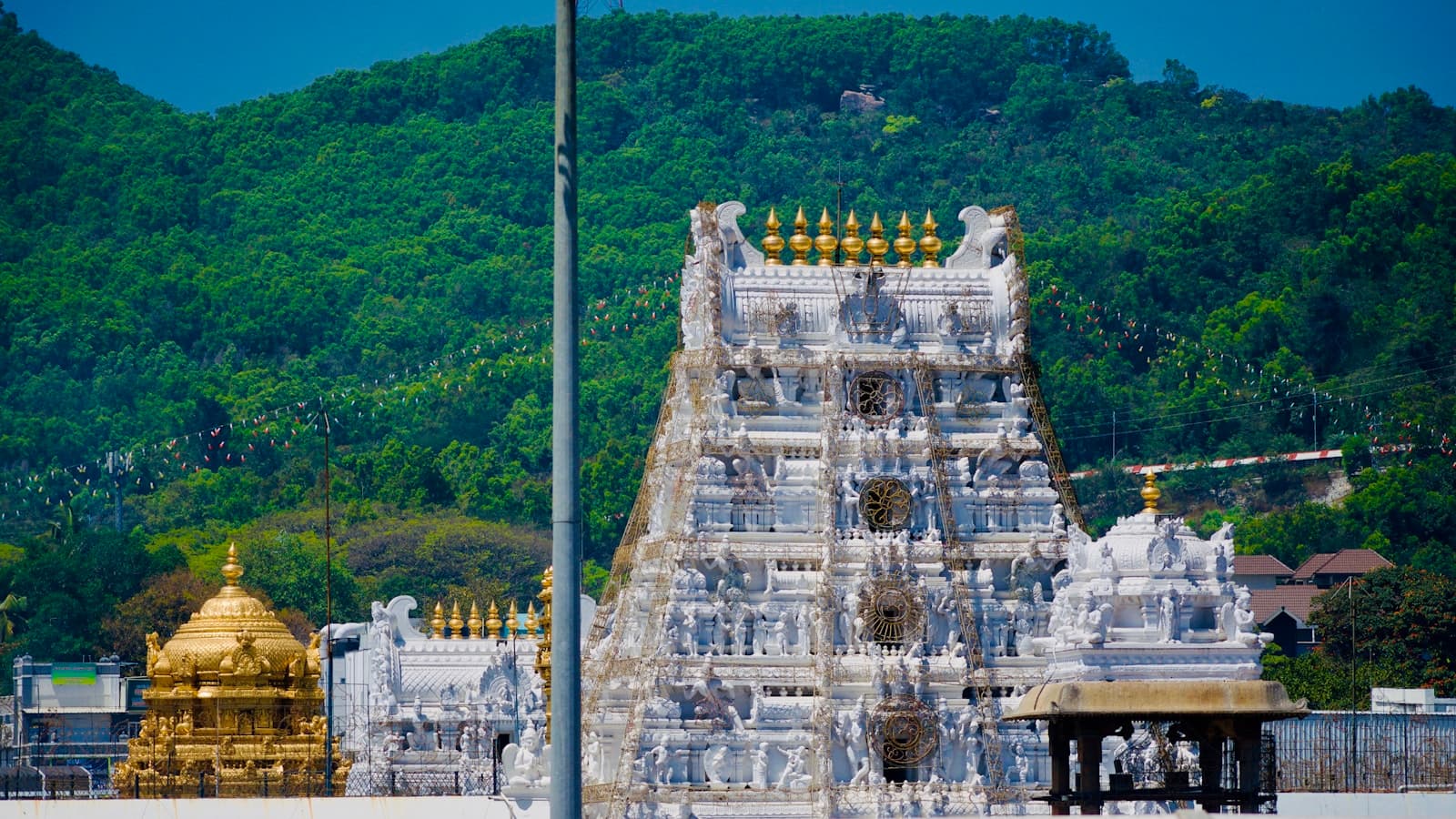
One of the most visited pilgrimage sites in the world, dedicated to Lord Venkateswara, an incarnation of Lord Vishnu, atop the Tirumala hills. Millions of devotees offer their hair here in the ritual of tonsure, and the temple's laddu prasadam, made under a Geographical Indication-protected recipe, is among India's most famous temple offerings.
A celebrated Vaishnava temple dedicated to Lord Krishna, founded by the 13th-century philosopher-saint Madhvacharya, who is said to have installed an idol that arrived from Dwaraka by ship. Devotees view the deity only through a carved silver window (Kanakana Kindi), and the temple's kitchen — run by hereditary priests on a strict rotation — is credited with originating Udupi's famous vegetarian cuisine.
One of the 108 Divya Desams, located on the banks of the Tamirabharani river near Tuticorin. The presiding deity Vaikuntanatha (Vishnu) is in a unique standing posture (a rare form called Thayar Sannidhi). The Shanmukha Nadhi is a sacred water channel here.
A cave shrine of Lakshmi Narasimha set among rocky hills in Telangana, traditionally associated with the sage Yadava Maharshi's penance. Long a modest pilgrimage site, it has recently been rebuilt into one of the state's grandest temple complexes, with an expansive new gopuram and granite architecture.