By Deity
By State
60 temples across South India.
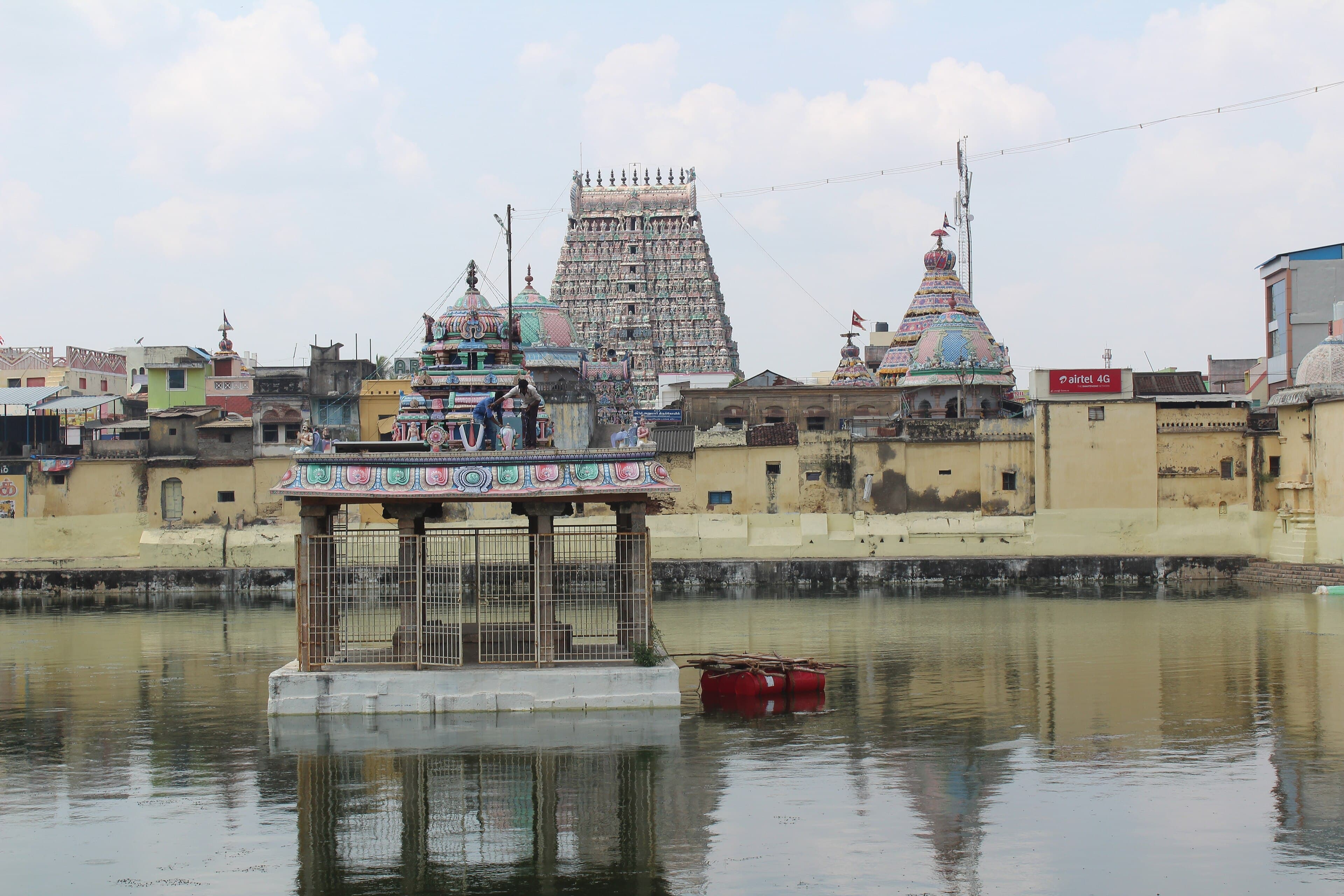
The principal Shiva temple of Kumbakonam and one of the most important in Tamil Nadu. Lord Kumbeswarar (Shiva who formed the universe from a 'kumba'/pot of nectar) is worshipped here. During the rare Mahamaham festival (once in 12 years), lakhs bathe in the sacred Mahamaham tank adjacent to the temple — the largest religious gathering in Tamil Nadu.
Narasimha
The foremost shrine of Lord Narasimha in India, where Vishnu is said to have slain the demon Hiranyakashipu to save Prahlada. Nine different forms of Lord Narasimha (Nava Narasimha) are worshipped in nine separate shrines spread across Lower and Upper Ahobilam in the Nallamala forest.
Shiva
A major Shiva temple on the banks of the Vasistha Godavari where the Shivalingam is white as milk (ksheera = milk). One of the Pancharama Kshetras cluster temples; receives lakhs on Mahashivaratri. The temple's location amid paddy fields and river delta is serene.
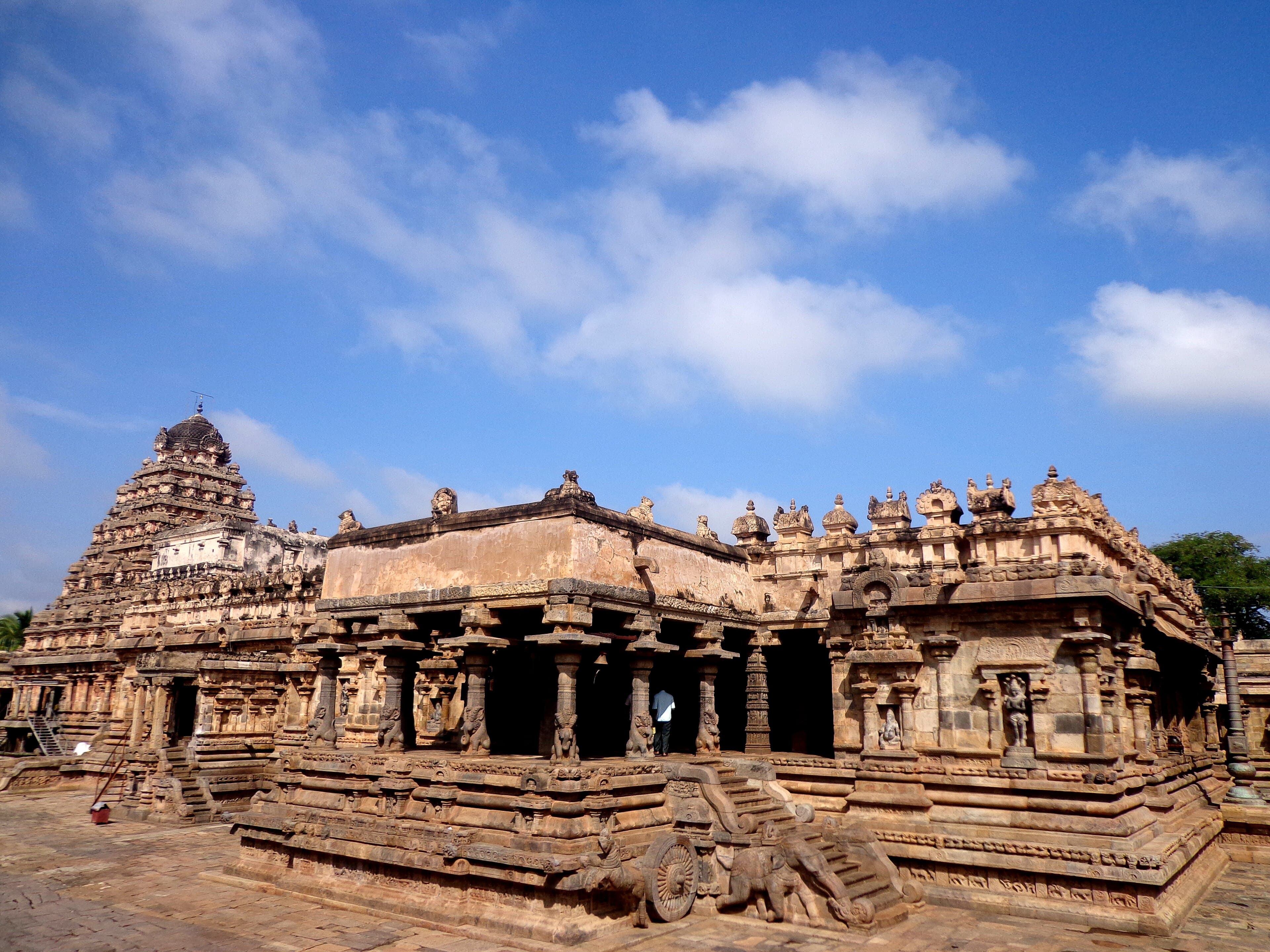
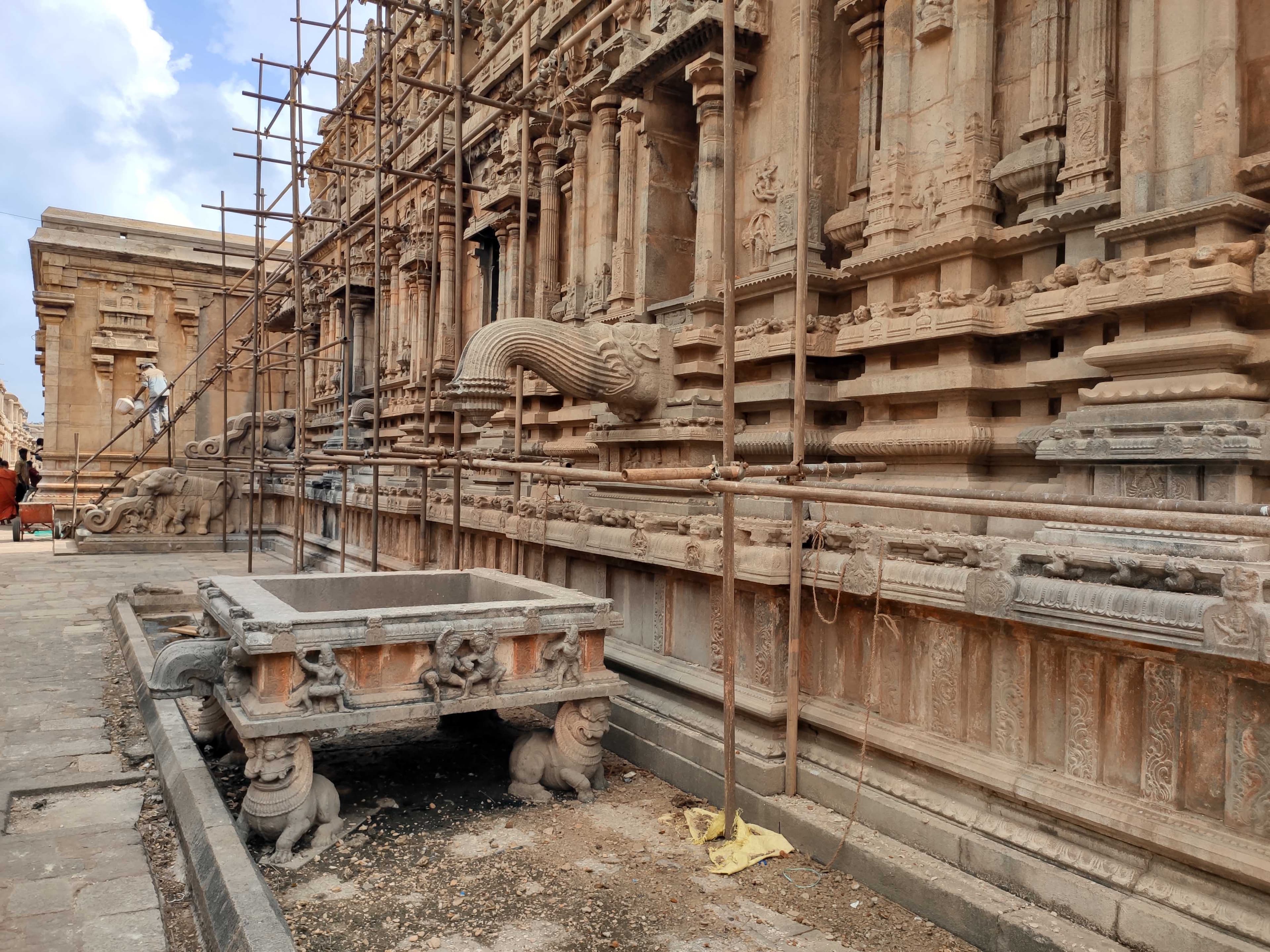
A UNESCO World Heritage Site (Great Living Chola Temples group) built by Raja Raja Chola II in the 12th century CE. Lord Airavateswara (Shiva worshipped by Airavata, Indra's white elephant) is enshrined here. The temple's 'chariot steps' carved to look like a stone chariot and the extraordinary sculptures of Yama, the god of death, are extraordinary.
A Divya Desam Vishnu temple on the Alagar Hills, 21 km from Madurai, dedicated to Lord Kallazhagar. It is famous for the Chithirai festival, when the deity is carried down from the hills into the Vaigai river to 'meet' his sister Meenakshi ahead of her temple wedding in Madurai.
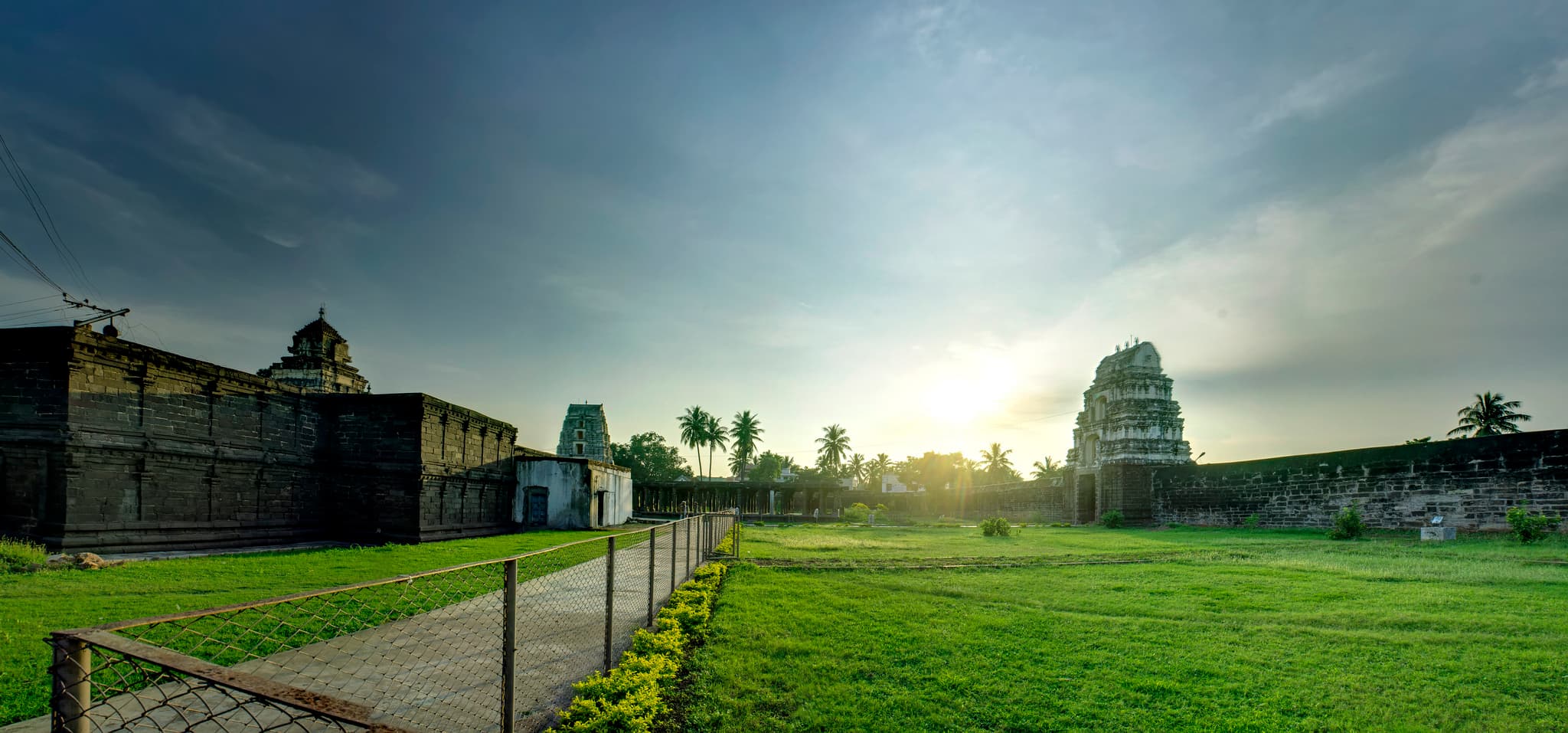
A group of nine 7th-8th century CE Chalukya temples on the bank of the Tungabhadra — each dedicated to a different form of Brahma (though Shiva is the principal deity in each). One of the most historically significant temple complexes in the Deccan. The site also has an ancient Jogulamba Devi temple (Shakti Peetha).
The Jupiter (Guru/Brihaspati) Navagraha temple near Kumbakonam, where Lord Apatsahayeswara (Shiva who protects from calamity) is the presiding deity. Worshipping here on Thursdays (Jupiter's day) is believed to enhance wisdom, education, fortune, and spiritual growth. The temple tank is called Brahma Theertham.
The ancient Amaravathi site on the Krishna river is both a Buddhist Maha Stupa (2nd century BCE) and the location of the Amareswara (Shiva) Pancharama Kshetra. The Archaeological Museum here houses some of the finest Buddhist sculptures in Asia. A dual heritage of Buddhist and Hindu significance.
The principal Pancharama shrine, dedicated to Lord Amareswara (Shiva), in the historic city of Amaravati on the banks of the Krishna River. Amaravati was once the capital of the ancient Satavahana dynasty and a major Buddhist centre, and the temple today stands beside the ruins of the Amaravati Stupa.
Krishna
A famous Krishna temple in Alappuzha where legend holds that Lord Krishna himself challenged a chess prodigy and, upon losing, offered himself as a slave. Since then, the temple has served 'paal payasam' (sweet rice pudding) free to all devotees daily — a tradition believed to be over 1,000 years old.
Vishnu
The only lake temple in Kerala — Lord Ananthapadmanabha (Vishnu reclining on Adishesha) is enshrined on a small island in the middle of a sacred lake. A unique resident crocodile called 'Babiya' is believed to be a divine guardian — it has never harmed anyone and is fed by the temple. Considered the original peetham (source temple) of Padmanabhaswamy in Thiruvananthapuram.
Ranganatha
One of the most visited temples in Andhra Pradesh — Lord Veeravenkata Satyanarayana (Vishnu as the 'eternal truth') is enshrined on the Ratnagiri hill. Famous for the Satyanarayana Swamy Vrata performed here by thousands of devotees daily. Located near the Pampa river.
A Vishnu temple at the confluence of the Vasishta Godavari with the Bay of Bengal — one of the most auspicious sea-river confluences in Andhra Pradesh. The annual Karthika Masam festival draws lakhs of pilgrims. Antarvedi is known as the 'Prayag of the South'.
Subramanya
A famous Murugan (Subrahmanya) temple 20 km from Tirupati where the deity is worshipped as Appalanna Swamy. Especially popular with devotees seeking blessings for serpent-related issues (Sarpa Dosha). Part of the Tirupati temple circuit.
A hilltop Vishnu temple near Tirupati where Lord Venkateswara is in a unique 'leaning' posture (appikonda = leaning). One of the lesser-known but significant temples in the Tirupati cluster. Managed by TTD.
One of the 108 Divya Desams (Lord Vishnu as Parthasarathy — Krishna as Arjuna's charioteer). Famous for the Aranmula Boat Race (snake boat race on the Pampa river, the oldest in Kerala) and the unique Aranmula Kannadi (metal mirror made only here). Part of the Kerala Ashtamangalam pilgrimage circuit.
(Sun)
One of only three major Surya (Sun god) temples in India, built by the Kalinga king Devendra Varma in the 7th century CE. Designed so that sunlight falls directly on the deity's feet on the equinoxes. The Sun god here is worshipped as Surya Narayana (a combined form of Surya and Vishnu).
A vast Shiva temple at the foot of Arunachala hill, revered as the 'Agni' (fire) shrine among the Pancha Bhoota Sthalams. Its towering gopuram is among the tallest in India, and the temple hosts Karthigai Deepam, when a giant flame is lit atop the hill and remains visible for miles.
Bhagavathy
A major Bhagavathy temple on the banks of the Karamana river near Thiruvananthapuram, where the river water is believed to have healing properties. The annual Murajapam (a 7-day Vedic recitation) is a grand event. One of the important Devi temples for Thiruvananthapuram pilgrims along with Attukal.
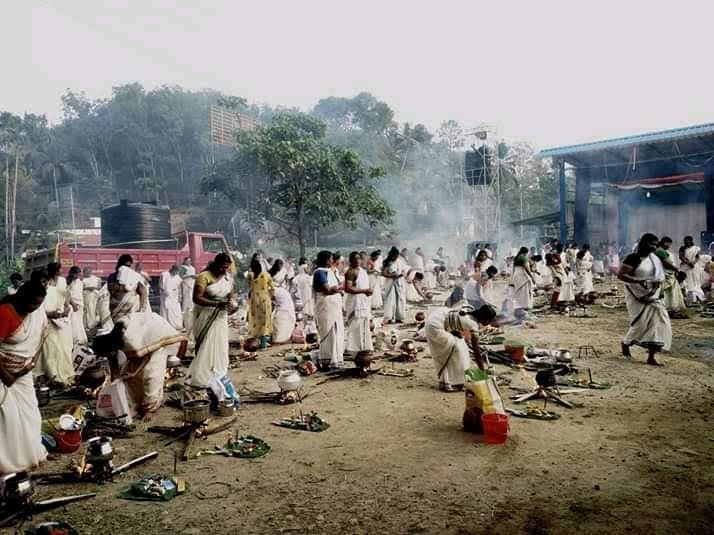
Home to the world's largest annual gathering of women — the Attukal Pongala festival holds the Guinness World Record with over 2.5 million women cooking pongal (rice pudding) on the streets simultaneously. Goddess Attukal Amma (Bhagavathy) is called the 'Sabarimala of Women'. One of Kerala's most powerful Devi temples.
Jupiter (Guru) Navagraha temple. The Guru (Jupiter) Navagraha temple at Azhagaputhur, dedicated to Brihaspati — worshipping here is believed to enhance wisdom, education and prosperity.
A Divya Desam Vishnu temple on the Alagar Hills, where Lord Sundararajaswami (Kallalagar — 'the beautiful rock god') is enshrined. Famous for the Chithirai festival when Lord Kallalagar is taken in a procession to the Vaigai river — a spectacle of 1 million devotees. The hillock has Murugan shrines too, creating a spiritually rich complex.
Dattatreya
A sacred hilltop in the Baba Budan range of the Western Ghats, revered by both Hindus (as a Dattatreya shrine) and Muslims (as the resting place of Sufi saint Baba Budan who brought coffee seeds to India). The site represents remarkable religious harmony — both communities worship here side by side. Famous for stunning Ghats scenery and coffee estate views.
A group of four remarkable cave temples (3 Hindu + 1 Jain) carved into red sandstone cliffs by the Chalukya kings (6th century CE). Cave 3 contains a stunning 18-armed Vishnu Trivikrama sculpture. A UNESCO World Heritage Site and one of the finest examples of early Deccan rock-cut architecture.
Devi
One of the most popular goddess temples in Hyderabad, dedicated to Goddess Yellamma (Renuka Devi / Jogulamba). Located in the heart of the city, the temple draws 1-2 lakh devotees on Tuesdays and Fridays. The annual Bonalu festival here is celebrated with extraordinary devotion — part of Hyderabad's famous Bonalu tradition.
One of the most powerful Shakti temples in Karnataka, 5 km from Badami. Goddess Banashankari (Devi of the forest/banana grove) is worshipped here in a unique form — seated on a lion crushing a demon, holding a skull. The Rathotsava (chariot festival) here draws 5 lakh pilgrims and is one of Karnataka's grandest festivals.
A masterpiece of Hoysala architecture (12th century CE) — the Channakeshava Temple at Belur took 103 years to build and features some of the most intricate stone carvings in India. A UNESCO World Heritage Site (2023). The sculpture detail rivals that of Khajuraho.
Rama
One of the most sacred Rama temples in India, perched on the banks of the Godavari river. Lord Seetharamachandra is enshrined here in his state of divine marriage — Rama with Sita and Lakshmana. The Telangana government conducts a grand state wedding ceremony (Seetharama Kalyanam) on Rama Navami, broadcast live across the state.
Bhadrakali
One of the oldest Shakti temples in the Deccan, dedicated to the fierce Goddess Bhadrakali, believed to date to the 8th century CE under the Chalukya king Pulakeshin II. Its hilltop setting beside the scenic Bhadrakali lake adds to its standing as a major pilgrimage site in Telangana.
The Bhramaramba (Devi as the bee goddess) shrine within the Srisailam complex is one of the 18 Maha Shakti Peethas. Together, Mallikarjuna (Shiva) and Bhramaramba (Shakti) make Srisailam the only site in India that is simultaneously a Jyotirlinga and a Shakti Peetha.
A Vishnu temple in the Biligiri Rangana Hills (BRT) Wildlife Sanctuary at an elevation of 1,700 metres — where the Eastern and Western Ghats meet. 'Biligiri' means 'white rock' in Kannada — the rock formation near the temple glows white in evening light. The scenic hill drive through the tiger reserve is an experience in itself.
Venkateswara
A modern white-marble temple on Naubath Pahad hill overlooking Hyderabad and Hussain Sagar lake, dedicated to Lord Venkateswara. Built by the Birla Foundation and completed in the 1970s, it blends South Indian, Rajasthani, and Odishan architectural styles across its gleaming white-marble structure.
A UNESCO World Heritage Chola-era temple built by Raja Raja Chola I and completed around 1010 CE, crowned by a 66-metre vimana capped with a single granite block weighing an estimated 80 tonnes. Dedicated to Lord Shiva, it remains a masterpiece of Dravidian architecture and Chola engineering.
A Shiva temple at Tadipatri famous for its remarkable 15th-century Vijayanagara architecture — particularly the Gopura (entrance tower) with extraordinary miniature carvings. The 'bugga' (natural spring) within the temple premises is considered sacred. The temple's Alankara Mantapa has some of the finest stone carvings in Andhra.
A famous Bangalore temple housing one of the largest monolithic Nandi (Shiva's sacred bull) statues in the world — 4.5 metres tall and 6 metres long, carved from a single granite rock. Built by Kempe Gowda I (founder of Bangalore) in the 16th century. The annual Kadalekayi Parishe (groundnut fair) here is one of Bangalore's most beloved folk festivals.
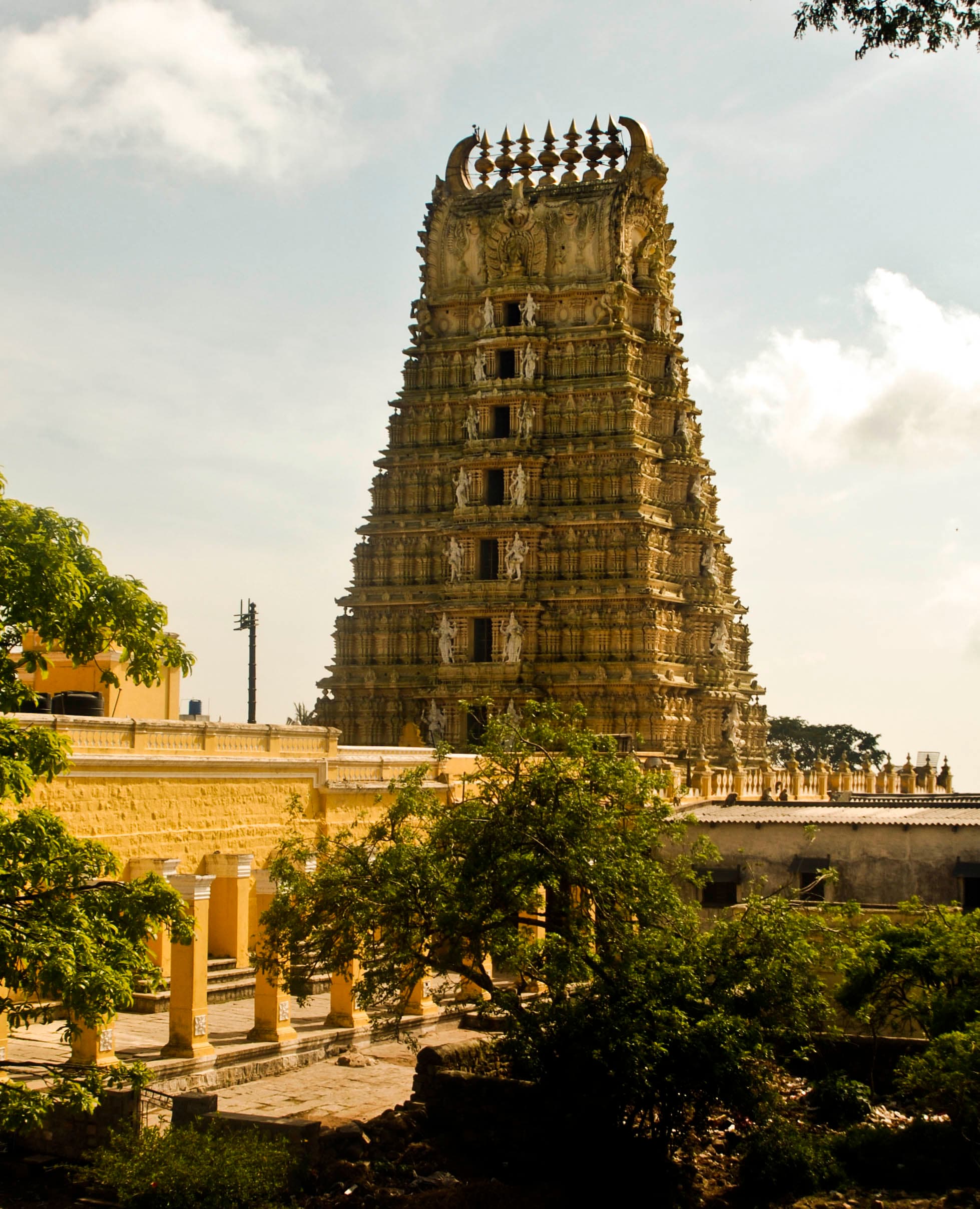
A hilltop shrine atop Chamundi Hills overlooking Mysuru, dedicated to Goddess Chamundeshwari, the fierce form of Durga said to have slain the buffalo-demon Mahishasura nearby. A giant statue of the demon stands near the temple, and the thousand-step stone stairway up the hill passes a monolithic Nandi bull carved from a single rock.
One of the ancient Vishnu temples in Andhra, dedicated to Bhavanarayana (Vishnu in a unique four-armed standing posture). Built during the Chalukya period (7th–8th century CE). The temple is known for its intricately carved Dwajasthambha (flag post) and the beautiful Garuda shrine.
A hilltop Vishnu temple of great spiritual significance to the Sri Vaishnava tradition. Ramanujacharya spent many years here and installed the 'Sampige Narayana' deity. The annual Vairamudi festival, where Lord Cheluvanarayana is adorned with a diamond crown, draws lakhs of pilgrims.
A dual temple complex (Shiva and Parvati) where a rare biological miracle is said to occur — the Goddess Bhagavathy is believed to menstruate monthly (evidenced by periodic reddening of the deity's garments), making this a unique fertility shrine. The annual festival during this occurrence draws lakhs of devotees.
One of Kerala's most celebrated Devi temples, famous for the Kuthiyottam festival — where young boys pierce their bodies with small hooks and carry pots on their heads as offerings. The Vilakku Veppu (oil lamp festival) here is the largest lamp festival in Kerala. One of the foremost Bhagavathy temples in south Kerala.
Famous across India as the 'Visa Balaji Temple' — devotees seeking overseas visas (especially US) perform 11 circumambulations praying for visa approval, and return to perform 108 circumambulations in gratitude. The temple charges NO fees or hundi (donation box) and is managed purely by volunteers. One of the most unique temples in India.
A revered shrine of Goddess Bhagavathy near Kochi, worshipped across three sequential forms through the day — as Saraswati in the morning, Bhadrakali at noon, and Durga in the evening. The temple is also known for rituals believed to offer relief from mental distress, drawing devotees from across Kerala.
A famous hilltop Narasimha temple on the rocky Devarayadurga hills, 60 km from Bangalore. The 'Bhoga Narasimha' (Lord Narasimha in a benevolent resting posture) and 'Yoga Narasimha' (meditative posture) shrines are on twin hills. The scenic hilltop location with huge boulders and forest is breathtaking.
Lakshmi
A 12th-century CE Hoysala masterpiece — considered one of the finest examples of Hoysala art after Belur and Halebid. Built by Buci, a minister of King Vishnuvardhana. Four shrines face the cardinal directions; the Channakeshava and Lakshmi Narayana shrines have exceptionally fine sculptures. A hidden gem of Karnataka heritage.
One of the Pancharama Kshetras, dedicated to Lord Bhimeshwara (Shiva), renowned for its intricate Chalukya-style stone carvings and towering gopuram. It also enshrines the goddess Manikyamba, one of the eighteen Shakti Peethas, giving it dual Shaiva and Shakta significance.
Called 'Chinna Tirupati' (Small Tirupati), this hilltop Vishnu temple near Eluru is believed to be the spot where Veeravenkata Satyanarayana himself appeared to a devotee. Receives 50,000+ pilgrims on weekends. The climb of 600 steps or the ropeway are both popular.
A powerful forest goddess (Vana Durga) temple on the scenic banks of the Manjira river, 90 km from Hyderabad. Devotees cross the river by boat to reach the temple. Very popular with Hyderabad pilgrims, especially on Tuesdays and Sundays. The forested riverbank setting makes it a unique pilgrimage experience.
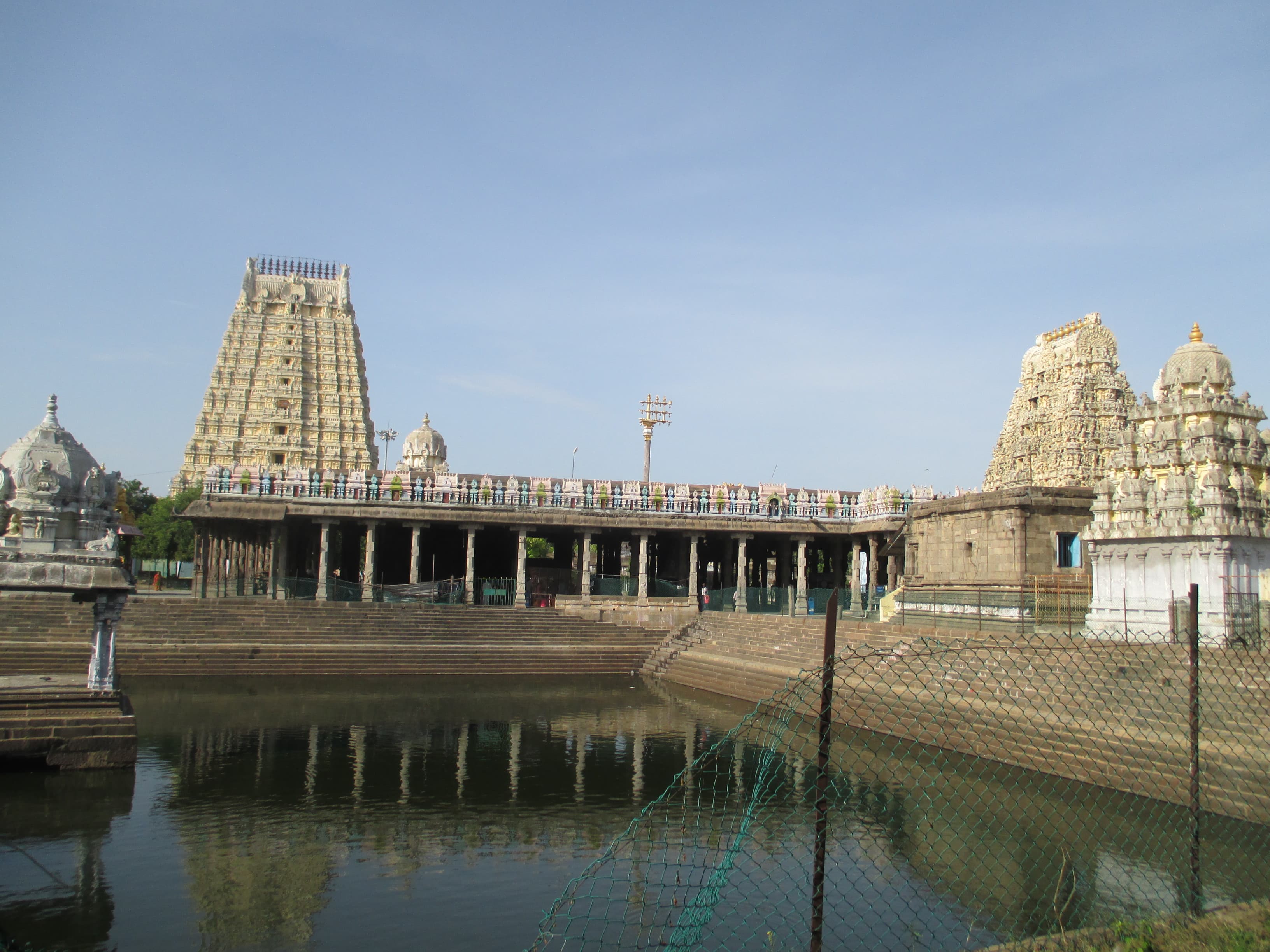
The 'Prithvi' (earth) Pancha Bhoota Sthalam, dedicated to Lord Shiva as Ekambareswarar, in the temple town of Kanchipuram. Its 58-metre gopuram is among the tallest in Tamil Nadu, and its ancient mango tree — said to be over 3,500 years old — is revered as the spot where Parvati is believed to have worshipped Shiva.
One of the most important Shiva temples in Kerala, famous for its stunning golden flagpole and the richly illustrated murals inside the sanctum — depicting Shiva's cosmic dance (Nataraja) in vivid detail. The annual Ettumanoor Ezharaponnana (seven-and-a-half elephant procession) is a spectacular cultural event.
A UNESCO World Heritage Site built by Rajendra Chola I (1025 CE) to celebrate his conquest of the Ganges. A twin to Thanjavur's Big Temple but with a unique curved vimana (tower) — the only example in South Indian temple architecture. The Nandi (Shiva's bull) here is the largest in Tamil Nadu.
A major Murugan (Subrahmanya) temple 40 km from Bangalore, unique for its association with serpent worship (Sarpa Samskara) — second only to Kukke Subramanya in Karnataka for this ritual. The deity here is flanked by two serpents (Vasuki and Adisesha). Extremely popular with Bangalore devotees seeking relief from Sarpa Dosha.
Saraswathi
One of only three Saraswathi (Goddess of Learning) temples in India — the others are in Kashmir and Andhra Pradesh. Every year, parents bring children for Vidhyarambham (the initiation of learning) here on Dussehra. Located on the scenic banks of the Godavari river.
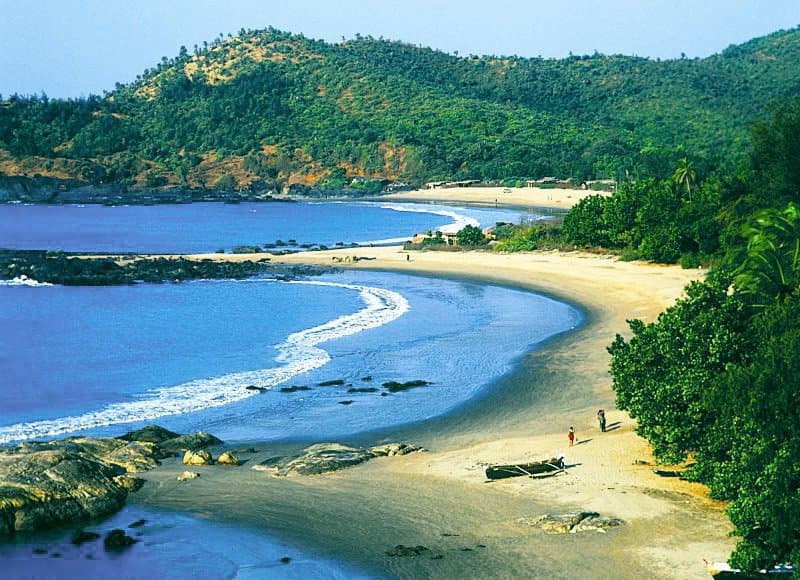
One of the seven Mukti Kshetras of India (sacred liberation sites), dedicated to Lord Mahabaleshwara (Great Shiva). The Atmalinga (Shiva's soul-lingam brought by Ravana) is the most sacred object here — Ganesha tricked Ravana into placing it here permanently. A major pilgrimage centre where devotees take a ritual bath in the sea before worshipping.
A major Lakshmi temple 90 km from Bangalore, extremely popular with devotees from across Karnataka. The golden idol of Goddess Mahalakshmi is believed to grant wishes related to wealth, marriage, and fertility. Receives 1-2 lakh pilgrims on Fridays and major festival days.
The largest temple in Tirupati town (not on Tirumala hill), dedicated to Lord Govindaraja (Vishnu reclining). The Chola king Kulottunga II is credited with building this magnificent 12th-century temple. The idol of Govindaraja reclining on Adishesha is one of the finest Vishnu sculptures in the Deccan.
One of the oldest Shiva temples in India, housing an extraordinarily ancient Shivalinga (estimated 3rd century BCE to 1st century CE) — carved from solid granite with Shiva standing atop the water demon Apasmarapurusha. The lingam's artistry is considered the highest point of early Indian sculpture.
A revered Krishna temple in Kerala, one of the most visited Vaishnava shrines in South India, where the deity is worshipped as Guruvayurappan. Known as 'Bhuloka Vaikunta' (Vaikuntha on earth), the temple's elephants — housed at the nearby Punnathur Kotta sanctuary — are famous throughout Kerala and take part in its major festivals.
One of the most important Murugan (Subrahmanya) temples in Kerala, known for its annual boat procession (Vallom). The temple's unique tradition involves a Brahmin elephant that refuses to eat non-vegetarian food — verified and documented. Thousands of devotees from across Kerala attend the annual festival.
Annapoorneshwari
A powerful Shakti temple deep in the Western Ghats, dedicated to Goddess Annapoorneshwari (the provider of food). Located at the confluence of two rivers, the temple feeds all pilgrims free of charge (annadana). The setting amid the mist-covered Western Ghats is breathtaking. Very famous in coastal Karnataka and Kerala.
The largest Hoysala temple, dedicated to Lord Shiva as Hoysaleshwara and Shanthhaleshwara. The entire outer wall is covered with an extraordinary 240-metre frieze of animals, mythological scenes, and intricate carvings. A UNESCO World Heritage Site (2023) just 16 km from Belur.