By Deity
By State
37 temples across South India.
Krishna
A famous Krishna temple in Alappuzha where legend holds that Lord Krishna himself challenged a chess prodigy and, upon losing, offered himself as a slave. Since then, the temple has served 'paal payasam' (sweet rice pudding) free to all devotees daily — a tradition believed to be over 1,000 years old.
Vishnu
The only lake temple in Kerala — Lord Ananthapadmanabha (Vishnu reclining on Adishesha) is enshrined on a small island in the middle of a sacred lake. A unique resident crocodile called 'Babiya' is believed to be a divine guardian — it has never harmed anyone and is fed by the temple. Considered the original peetham (source temple) of Padmanabhaswamy in Thiruvananthapuram.
One of the 108 Divya Desams (Lord Vishnu as Parthasarathy — Krishna as Arjuna's charioteer). Famous for the Aranmula Boat Race (snake boat race on the Pampa river, the oldest in Kerala) and the unique Aranmula Kannadi (metal mirror made only here). Part of the Kerala Ashtamangalam pilgrimage circuit.
Bhagavathy
A major Bhagavathy temple on the banks of the Karamana river near Thiruvananthapuram, where the river water is believed to have healing properties. The annual Murajapam (a 7-day Vedic recitation) is a grand event. One of the important Devi temples for Thiruvananthapuram pilgrims along with Attukal.
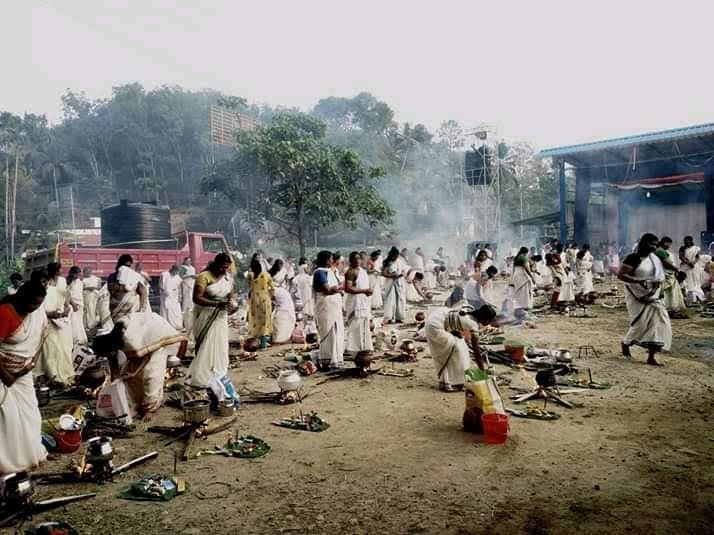
Home to the world's largest annual gathering of women — the Attukal Pongala festival holds the Guinness World Record with over 2.5 million women cooking pongal (rice pudding) on the streets simultaneously. Goddess Attukal Amma (Bhagavathy) is called the 'Sabarimala of Women'. One of Kerala's most powerful Devi temples.
Shiva
A dual temple complex (Shiva and Parvati) where a rare biological miracle is said to occur — the Goddess Bhagavathy is believed to menstruate monthly (evidenced by periodic reddening of the deity's garments), making this a unique fertility shrine. The annual festival during this occurrence draws lakhs of devotees.
One of Kerala's most celebrated Devi temples, famous for the Kuthiyottam festival — where young boys pierce their bodies with small hooks and carry pots on their heads as offerings. The Vilakku Veppu (oil lamp festival) here is the largest lamp festival in Kerala. One of the foremost Bhagavathy temples in south Kerala.
A revered shrine of Goddess Bhagavathy near Kochi, worshipped across three sequential forms through the day — as Saraswati in the morning, Bhadrakali at noon, and Durga in the evening. The temple is also known for rituals believed to offer relief from mental distress, drawing devotees from across Kerala.
One of the most important Shiva temples in Kerala, famous for its stunning golden flagpole and the richly illustrated murals inside the sanctum — depicting Shiva's cosmic dance (Nataraja) in vivid detail. The annual Ettumanoor Ezharaponnana (seven-and-a-half elephant procession) is a spectacular cultural event.
A revered Krishna temple in Kerala, one of the most visited Vaishnava shrines in South India, where the deity is worshipped as Guruvayurappan. Known as 'Bhuloka Vaikunta' (Vaikuntha on earth), the temple's elephants — housed at the nearby Punnathur Kotta sanctuary — are famous throughout Kerala and take part in its major festivals.
Subramanya
One of the most important Murugan (Subrahmanya) temples in Kerala, known for its annual boat procession (Vallom). The temple's unique tradition involves a Brahmin elephant that refuses to eat non-vegetarian food — verified and documented. Thousands of devotees from across Kerala attend the annual festival.
Famous for the Kadammanitta Padayani — a spectacular ancient ritual art form where huge colourful effigies of divine forms (kolam) are danced through the night. Listed among Kerala's unique intangible cultural heritage. The festival draws thousands who come specifically to witness the Padayani performances.
A famous Bhagavathy (Goddess Durga) temple in Malappuram district, where the Goddess is said to have appeared spontaneously (swayambhu) in a forest. The annual Kettukazhcha (decorated elephant procession) festival draws massive crowds. One of north Kerala's most revered Devi shrines.
One of Kerala's most ancient and powerful Shakti temples, dedicated to Goddess Bhadrakali in her most fearsome form. Famous for the unique Bharani festival — where devotees sing crude folk songs (Bharanippatu) to provoke the Goddess's anger and power. Considered one of the original 18 Shakti shrines of Kerala.
Devi
One of only two temples in India dedicated to Bharata — the loyal younger brother of Rama from the Ramayana. Bharat is worshipped here as 'Koodalmanikyam' (Manikyam of the confluence). The temple also has a unique tradition: the deity Bharata is worshipped facing Ayodhya (north), always looking toward his elder brother Rama.
A unique forest Shiva temple that is accessible only during a 28-day annual festival (Vysakha Mahotsavam, May–June). For the rest of the year, the temple is closed and the forest takes over. The festival draws 5–7 lakh pilgrims who trek through the Wayanad forests and bathe in the sacred Bavali river. There is no permanent structure — offerings are made at a rock in the open air.
One of the most important Bhagavathy temples in the Malabar region, dedicated to Lokanarkavu Amma — a fierce form of the Goddess who protects the 'entire world' (loka = world, narkavu = sacred grove). The temple's Thottam (ritual recitation of the Goddess's legend) tradition and the ancient Kalari association make it culturally unique.
An ancient Bhagavathy temple on a forested hilltop (kavu = sacred grove) in coastal Kannur, associated with the Theyyam tradition of north Kerala. The Goddess here is believed to protect all sea-going fisherfolk and traders. The annual Theyyam performances at this temple preserve one of Kerala's oldest ritual art traditions.
A major Shiva temple 7 km from Kasaragod town, famous for the beautiful 11th-century Vijayanagara-style architecture and the unique 'Thripady' tradition where worship follows a 3-day cycle. The sacred Madhuvan river flows beside the temple. One of north Kerala's most visited pilgrimage sites.
A major Shiva temple 1 km from the famous Guruvayur Krishna Temple, traditionally visited by pilgrims before or after the Guruvayur darshan. Lord Mahadeva here is worshipped as Shiva who witnessed the installation of the Guruvayur idol. The two temples are spiritually and geographically interconnected.
The largest and most famous Naga (serpent deity) temple in India, managed entirely by women (a rare tradition). Thousands of snake idols fill the temple's 16-acre forest — devotees donate snake images for boons related to fertility, children, and health. The presiding deities are Nagaraja and Nagayakshi.
One of the most unique temples in India — there is no idol, no roof, no walls, no priest, and no specific ritual. The sacred 6-acre compound contains only an open-air space where Brahman (the universal divine consciousness) itself is worshipped. The annual Parabrahma Theyyam festival draws lakhs to this extraordinary 'temple without form'.
One of the two principal temples of the world-famous Thrissur Pooram festival. Goddess Paramekkavu is brought out in procession on 30+ caparisoned elephants on Pooram day (Thrissur Pooram). The 'Kudamattam' (umbrella exchange between the two Pooram groups) is one of the most photographed events in Kerala's culture.
Muthappan
A unique and extraordinary temple dedicated to Lord Muthappan — a divine manifestation who broke all caste barriers by accepting offerings of toddy (palm wine), fish, and meat, unlike any other Hindu deity. The Theyyam (ritual possession dance) performed here daily is considered a living manifestation of the Lord. All castes and religions are equally welcome.
A major Murugan (Subrahmanya) temple in Kannur district, one of the foremost Murugan shrines in north Kerala. The annual Thaipooya Mahotsavam and the Kavadi festival here draw pilgrims from across Malabar. The temple's Theyyam traditions blend with regular Agamic worship in a uniquely Kerala style.
Ayyappa
A forest hilltop shrine of Lord Ayyappa in the Periyar Tiger Reserve, drawing one of the largest annual pilgrimages in the world during the Mandala-Makaravilakku season. Pilgrims traditionally observe a 41-day vratham before the trek, climbing the temple's sacred 18 golden steps (pathinettampadi).
Padmanabha
A historic Vishnu temple in Thiruvananthapuram, where the deity is enshrined in the Anantha Shayanam posture, reclining on the serpent Adishesha. Renowned for its Dravidian gopuram and storied treasure vaults, it has traditionally been the family deity of the former Travancore royal family.
One of the oldest temples in Calicut (Kozhikode), built by the Zamorin kings in the 14th century CE. Lord Shiva is worshipped here as Thaliappa Swami. The temple's architectural style blends Kerala and Vijayanagara traditions. Located in the historic heart of Calicut — a city that was the world's foremost spice trading port.
Ranganatha
A Divya Desam Vishnu temple on the banks of the Bharatapuzha river — the site of the historic Mamankam festival held every 12 years (the 'Kumbh Mela of Kerala') where the Zamorin of Kozhikode presided. Lord Navamukunda (Vishnu with nine faces) is rare and unique to this temple.
An ancient Vishnu temple deep in the Brahmagiri forests of Wayanad, known as the 'Kashi of Kerala' — performing ancestral rites (shraddha) in the Papanasini stream here is believed to liberate ancestors from all sins. The temple is surrounded by pristine forests near the Karnataka border; spotted leopards and elephants are seen in the area.
One of the 108 Divya Desams, built in traditional Kerala style. Lord Sree Vallabha (Vishnu in a seated posture) is enshrined here. The temple elephant Gajendrakshetra is famous. The annual Champakkulam Moolam festival with 70 elephants in procession is a spectacular sight.
The second principal temple of the Thrissur Pooram, competing with Paramekkavu Bhagavathy in the grandest elephant procession in Kerala. The Thiruvambady Sri Krishna's elephant procession and the climactic 'Kudamattam' (umbrella exchange between the two groups) is the centrepiece of Thrissur Pooram festival.
An ancient Shiva temple in the historic port city of Kodungallur (the former capital of the Chera kings). One of the 108 Shiva temples glorified in Tamil literature. The temple is associated with Cheraman Perumal, the legendary Chera king who is said to have sailed to Mecca. The nearby Kodungallur Bhagavathy Temple is equally famous.
One of the 108 Vishnu temples of Kerala (Ashtottara Divya Desams of Kerala), where Lord Mahavishnu in his Trivikrama form stands majestically. The temple's unique 'Ulsavam' festival involves a spectacular boat procession on the adjacent Meenachil river. One of the major pilgrimages on the Kottayam temple circuit.
The royal temple of the erstwhile Cochin royal family, dedicated to Lord Poornathrayeesa (Vishnu holding a conch, disc, and mace in all three aspects). The Vrishchikotsavam festival here involves 50+ caparisoned elephants and is one of Kerala's grandest temple festivals. Located 12 km from Kochi.
An ancient Shiva temple in Thrissur, built in classical Kerala style with distinctive copper-plated, sloping roofs. It hosts the Thrissur Pooram, one of Kerala's grandest temple festivals, famed for its procession of caparisoned elephants and elaborate fireworks display.
A major Shiva temple on the banks of Vembanad Lake, historically significant as the site of the Vaikom Satyagraha (1924–25) — one of the first successful civil rights movements in India, led by Dr. Ambedkar and supported by Mahatma Gandhi, to allow untouchables entry into temple roads. The four-day Vaikathaashtami festival draws lakhs.