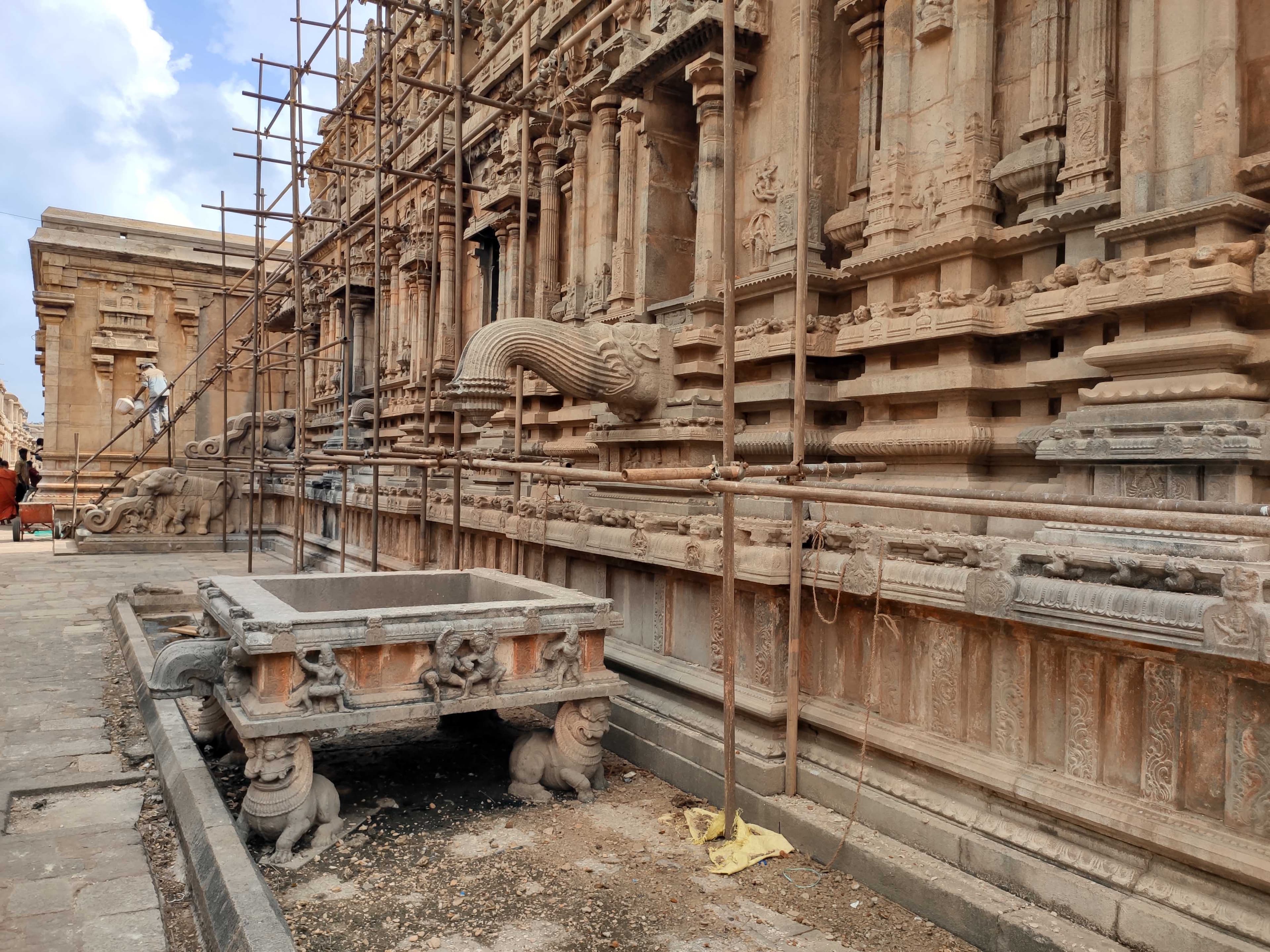
Ranganathaswamy Temple
Type
Hindu Temple
Deity
Lord Ranganatha
Pincode
620006
The largest functioning Hindu temple complex in the world, spanning around 156 acres across seven concentric enclosures and 21 gopurams, and foremost among the 108 Divya Desams of Lord Vishnu. Lord Ranganatha is worshipped here in his reclining form, and the temple's Vaikunta Ekadasi festival draws vast crowds each year.
History & Significance
Significance
Sri Ranganathaswamy Temple at Srirangam is the largest functioning Hindu temple in the world, covering 156 acres with 21 gopurams and 49 shrines. It is the foremost of the 108 Divya Desams and the first among them in the Sri Vaishnava tradition. The presiding deity, Lord Ranganatha, is Vishnu in his reclining (Ananta Shayana) form on the cosmic serpent Adishesha on an island formed by the Cauvery and Kollidam rivers.
History
The temple's origin is shrouded in legend but recorded history shows continuous worship here for over 1,500 years. Inscriptions confirm major construction work by the Cholas in the 9th–10th century CE. The great Vaishnava philosopher Ramanuja (1017–1137 CE) served as the head acharya here for many decades and significantly organised temple administration. The temple was sacked by the Delhi Sultanate in 1311 CE and the deity was concealed; it was restored and the temple rebuilt under the Vijayanagara Empire.
Lord Brahma received the Ranganatha idol from Lord Vishnu himself and worshipped it. He later gave it to King Ikshvaku of the Solar dynasty, ancestor of Lord Rama. When Vibhishana (Ravana's righteous brother) received the idol as a gift from Rama, he was instructed not to place it on the ground. When he set it down for a moment at Srirangam, it could not be moved — and thus Vishnu chose to remain here permanently, facing south toward Lanka, so he can always look toward his devotee Vibhishana.
Architecture
The temple has 7 concentric enclosures (prakarams), the largest forming a complete township with its own streets and residents. The Rajagopuram (main entrance tower) at 73 metres is the tallest temple tower in Asia, completed only in 1987. The 1,000-pillared hall (Sesharayar Mandapam) contains extraordinary Vijayanagara-era sculptures of rearing horses. The Garuda Mandapam houses a massive golden Garuda statue facing the deity.
Nearby Temples
Closest temples by distance — worth combining into the same trip.