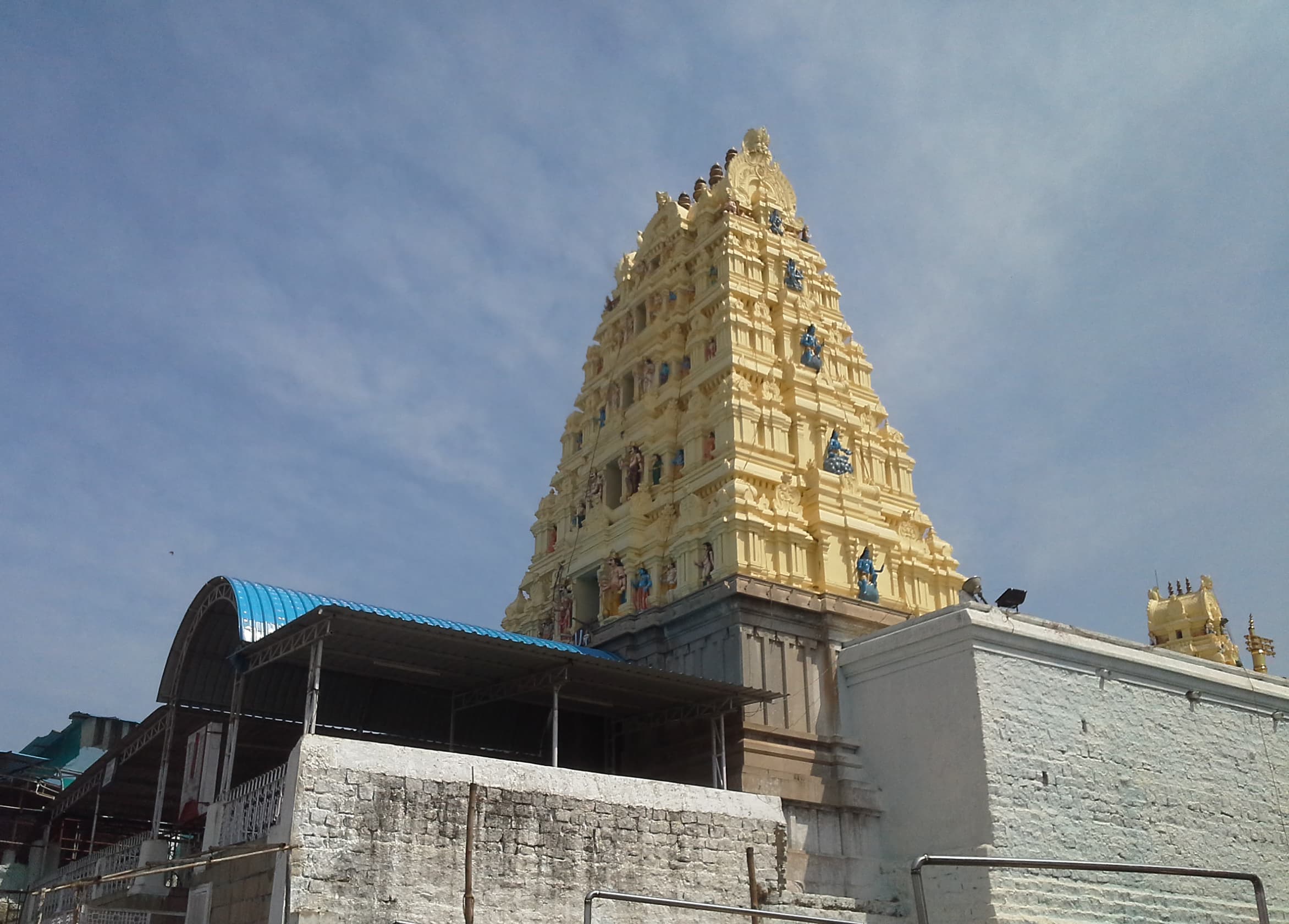
 Photo: Adityamadhav83 / CC BY-SA 4.0, via Wikimedia CommonsCurrently Closed
Yadagirigutta Temple
Type
Hindu Temple
Deity
Lord Narasimha
Pincode
508115
A cave shrine of Lakshmi Narasimha set among rocky hills in Telangana, traditionally associated with the sage Yadava Maharshi's penance. Long a modest pilgrimage site, it has recently been rebuilt into one of the state's grandest temple complexes, with an expansive new gopuram and granite architecture.
History & Significance
Significance
Yadadri Lakshmi Narasimha Swamy Temple at Yadagirigutta is one of the most important Vaishnava temples in Telangana and the foremost shrine of Lord Narasimha (the man-lion avatar of Vishnu) in the Deccan region. The temple complex was rebuilt at a cost of over ₹1,800 crore and reopened in January 2021, making it one of the most architecturally magnificent new temple complexes in India. It receives an estimated 1 lakh (100,000) pilgrims per month.
History
The original cave shrine is several centuries old. The temple gained prominence when a young cowherd named Yadava is said to have encountered Lord Narasimha emerging from the rocky hill. Over time, the hillock became a sacred pilgrimage site. In 2016, the Telangana state government announced a ₹1,800 crore renovation project to rebuild and expand the temple complex. The renovation, supervised personally by Chief Minister K. Chandrashekar Rao, transformed the entire hillock into a grand white-granite complex with new gopurams, mandapams, and devotee facilities. The renovated temple was consecrated in January 2021.
Lord Narasimha is believed to be present here in five sacred forms (Pancha Narasimhas) in natural rock formations within the cave: Jwala Narasimha (fiery form), Gandabherunda Narasimha (two-headed bird form), Yogananda Narasimha (meditative form), Ugra Narasimha (fierce form), and Lakshmi Narasimha (with Lakshmi on his lap). Visiting all five forms in a single pilgrimage is considered equivalent to visiting all Narasimha shrines in India.
Architecture
The newly built complex is a stunning blend of Chalukyan, Kakatiya, and Dravidian architectural styles rendered in pristine white granite from Rajasthan. The main gopuram rises to about 50 metres with a gold-plated vimana (1,200 kg of gold). The complex features wide pradakshina paths (circumambulation corridors), spacious mandapams, an annadana satram (free meal facility) for pilgrims, underground parking, and a ropeway connecting the base to the hilltop. The cave sanctum with the original Pancha Narasimha rock formations has been preserved within the new construction.
Nearby Temples
Closest temples by distance — worth combining into the same trip.