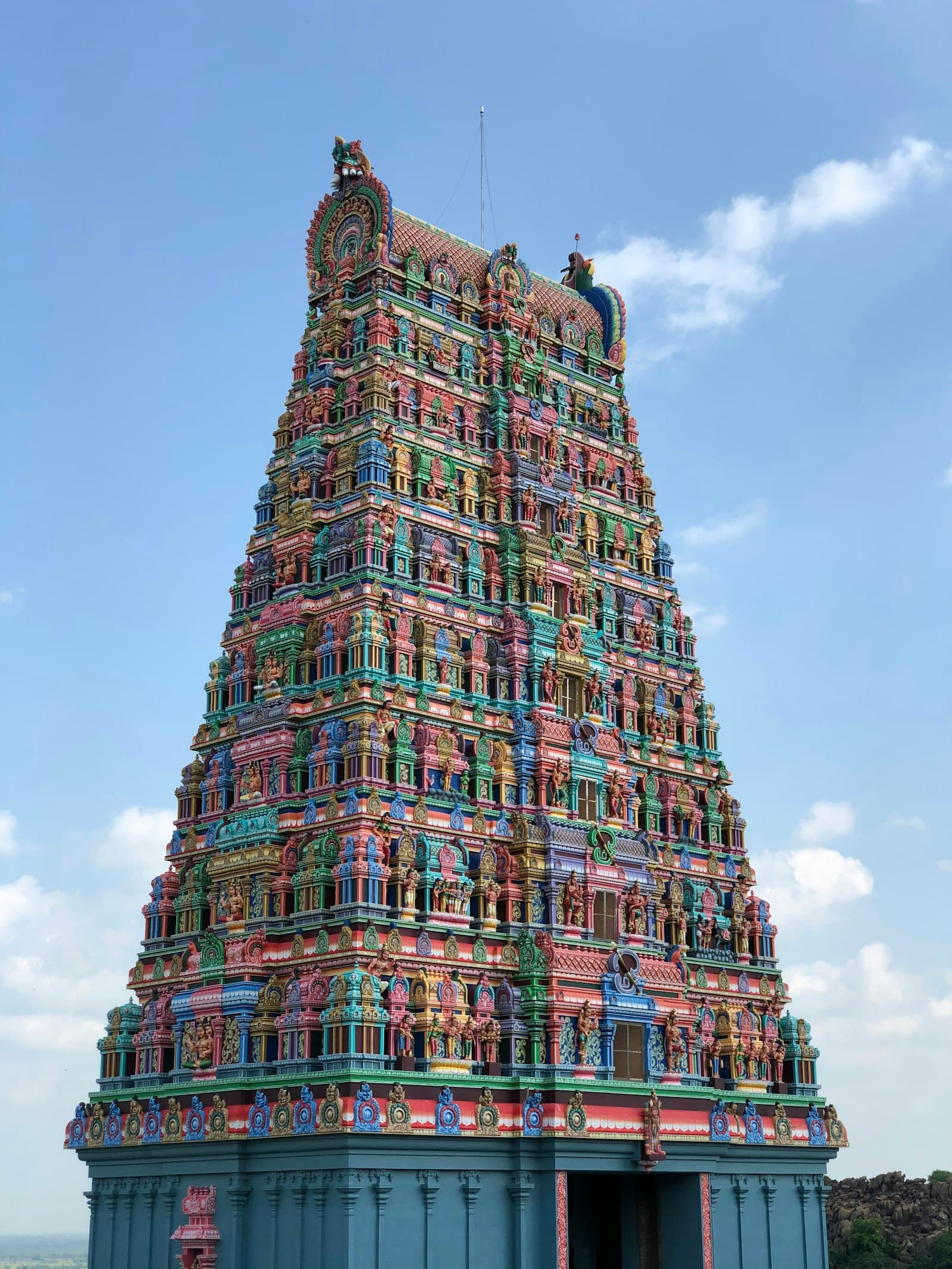
Ramanathaswamy Temple
Type
Hindu Temple
Deity
Lord Shiva
Pincode
623526
One of the twelve Jyotirlinga shrines of Lord Shiva and one of the four Char Dham sites, on the island of Rameshwaram. The temple is famed for its corridor of sculpted pillars — among the longest temple corridors in the world — and its 22 sacred wells (theerthams), which pilgrims traditionally bathe in before darshan.
History & Significance
Significance
Ramanathaswamy Temple at Rameshwaram is one of the twelve Jyotirlingas of Lord Shiva and also one of the 108 Divya Desams, making it sacred to both Shaivites and Vaishnavites. It is the southernmost of the four dhams (Char Dham) and draws millions of pilgrims annually who bathe in its 22 theerthams (sacred tanks) before worshipping Lord Ramanatha.
History
According to the Ramayana, Lord Rama worshipped Shiva here to seek absolution after killing Ravana (who was a Brahmin), installing a Shiva lingam made of sand. The presiding lingam — Ramalinga — is said to have been made and installed by Sita herself. The temple's magnificent corridors, stretching 1,220 metres, are among the longest in the world and were built over centuries by Nayak rulers and the kings of Ramnad.
After defeating Ravana, Lord Rama wanted to atone for the sin of killing a Brahmin. He sought to worship Lord Shiva and sent Hanuman to bring a lingam from Kailash. As Hanuman was delayed, Sita fashioned a lingam from sand on the spot — this became the Ramalinga (the primary lingam). When Hanuman returned with the Kailash lingam, both were installed side by side — and Rama asked that the Hanuman-brought lingam (Vishwalinga) be worshipped first, which is maintained to this day.
Architecture
The temple's corridors — 1,220 metres long — are the longest temple corridors in the world, supported by thousands of magnificently sculpted pillars. The main gopuram (tower) rises to 38.4 metres. The 22 sacred tanks inside the complex, each with different water temperatures and mineral compositions, are believed to wash away sin. The architecture is primarily in the Dravidian style with distinctive Nayak-period ornamentation.
Nearby Temples
Closest temples by distance — worth combining into the same trip.