By Deity
By State
7 temples across South India.
Ranganatha
A masterpiece of Hoysala architecture (12th century CE) — the Channakeshava Temple at Belur took 103 years to build and features some of the most intricate stone carvings in India. A UNESCO World Heritage Site (2023). The sculpture detail rivals that of Khajuraho.
A Vishnu temple in the Biligiri Rangana Hills (BRT) Wildlife Sanctuary at an elevation of 1,700 metres — where the Eastern and Western Ghats meet. 'Biligiri' means 'white rock' in Kannada — the rock formation near the temple glows white in evening light. The scenic hill drive through the tiger reserve is an experience in itself.
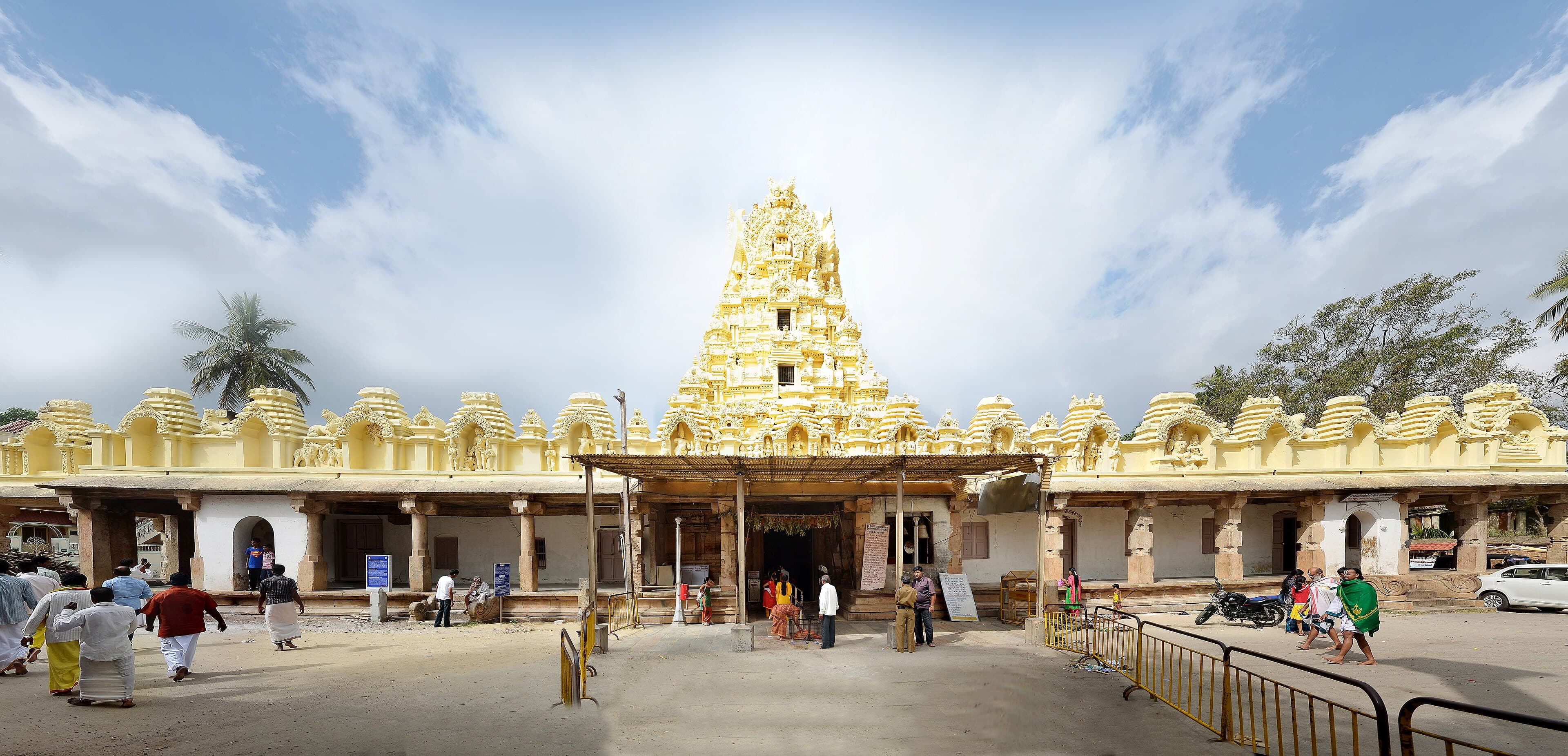
A hilltop Vishnu temple of great spiritual significance to the Sri Vaishnava tradition. Ramanujacharya spent many years here and installed the 'Sampige Narayana' deity. The annual Vairamudi festival, where Lord Cheluvanarayana is adorned with a diamond crown, draws lakhs of pilgrims.
Narasimha
A famous hilltop Narasimha temple on the rocky Devarayadurga hills, 60 km from Bangalore. The 'Bhoga Narasimha' (Lord Narasimha in a benevolent resting posture) and 'Yoga Narasimha' (meditative posture) shrines are on twin hills. The scenic hilltop location with huge boulders and forest is breathtaking.
Krishna
One of the largest ISKCON temples in the world, built on a 7.5-acre hill in Bangalore. The magnificent marble complex houses Sri Radha Krishna, Sri Nitai Gauranga, and Sri Krishna Balarama. A spiritual and cultural centre drawing 10,000+ visitors daily. The Janmashtami celebration here draws 5 lakh people in a single night.
A Vishnu temple on the historic island of Srirangapatna — the former capital of Hyder Ali and Tipu Sultan. Tipu Sultan, despite being Muslim, was a devotee of this temple and gifted it precious jewels. The site also has Tipu's summer palace and the place where he fell in battle (1799).
A celebrated Vaishnava temple dedicated to Lord Krishna, founded by the 13th-century philosopher-saint Madhvacharya, who is said to have installed an idol that arrived from Dwaraka by ship. Devotees view the deity only through a carved silver window (Kanakana Kindi), and the temple's kitchen — run by hereditary priests on a strict rotation — is credited with originating Udupi's famous vegetarian cuisine.