By Deity
By State
19 temples across South India.
Shiva
A major Shiva temple on the banks of the Vasistha Godavari where the Shivalingam is white as milk (ksheera = milk). One of the Pancharama Kshetras cluster temples; receives lakhs on Mahashivaratri. The temple's location amid paddy fields and river delta is serene.
The ancient Amaravathi site on the Krishna river is both a Buddhist Maha Stupa (2nd century BCE) and the location of the Amareswara (Shiva) Pancharama Kshetra. The Archaeological Museum here houses some of the finest Buddhist sculptures in Asia. A dual heritage of Buddhist and Hindu significance.
The principal Pancharama shrine, dedicated to Lord Amareswara (Shiva), in the historic city of Amaravati on the banks of the Krishna River. Amaravati was once the capital of the ancient Satavahana dynasty and a major Buddhist centre, and the temple today stands beside the ruins of the Amaravati Stupa.
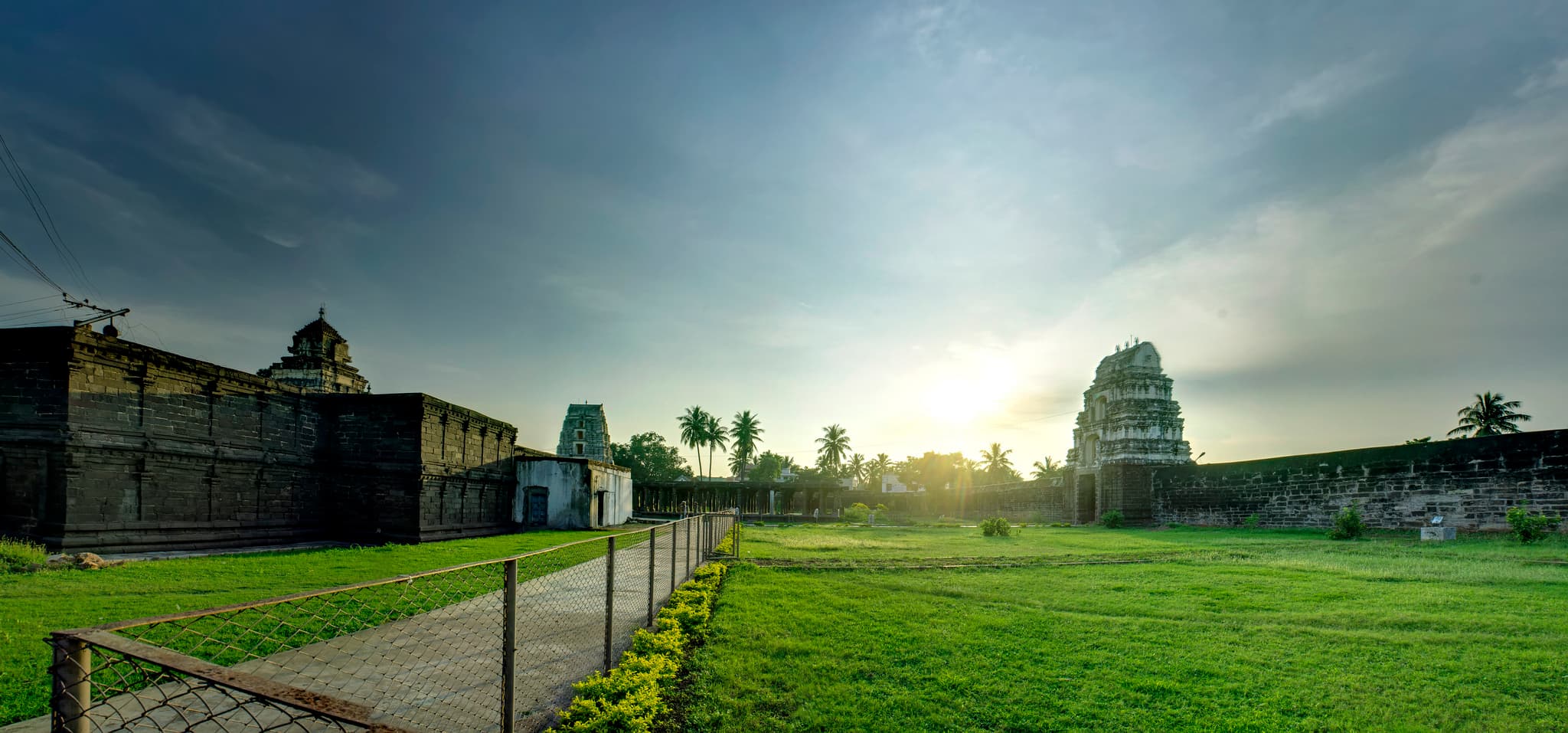
A Shiva temple at Tadipatri famous for its remarkable 15th-century Vijayanagara architecture — particularly the Gopura (entrance tower) with extraordinary miniature carvings. The 'bugga' (natural spring) within the temple premises is considered sacred. The temple's Alankara Mantapa has some of the finest stone carvings in Andhra.
One of the Pancharama Kshetras, dedicated to Lord Bhimeshwara (Shiva), renowned for its intricate Chalukya-style stone carvings and towering gopuram. It also enshrines the goddess Manikyamba, one of the eighteen Shakti Peethas, giving it dual Shaiva and Shakta significance.
One of the oldest Shiva temples in India, housing an extraordinarily ancient Shivalinga (estimated 3rd century BCE to 1st century CE) — carved from solid granite with Shiva standing atop the water demon Apasmarapurusha. The lingam's artistry is considered the highest point of early Indian sculpture.
A Shiva temple at the base of the Tirumala Hills where a natural waterfall (the only waterfall on the Tirumala range) cascades into a sacred tank. Sage Kapila is said to have worshipped Shiva here. Many Tirupati pilgrims bathe here before ascending Tirumala.
An ancient Shiva temple near Kurnool on the Tungabhadra river bank, where a sacred waterfall (Kapila Theertham) flows alongside the sanctum. Pilgrims bathe in the waterfall before worshipping. Important on the Kurnool–Mantralayam pilgrim circuit.
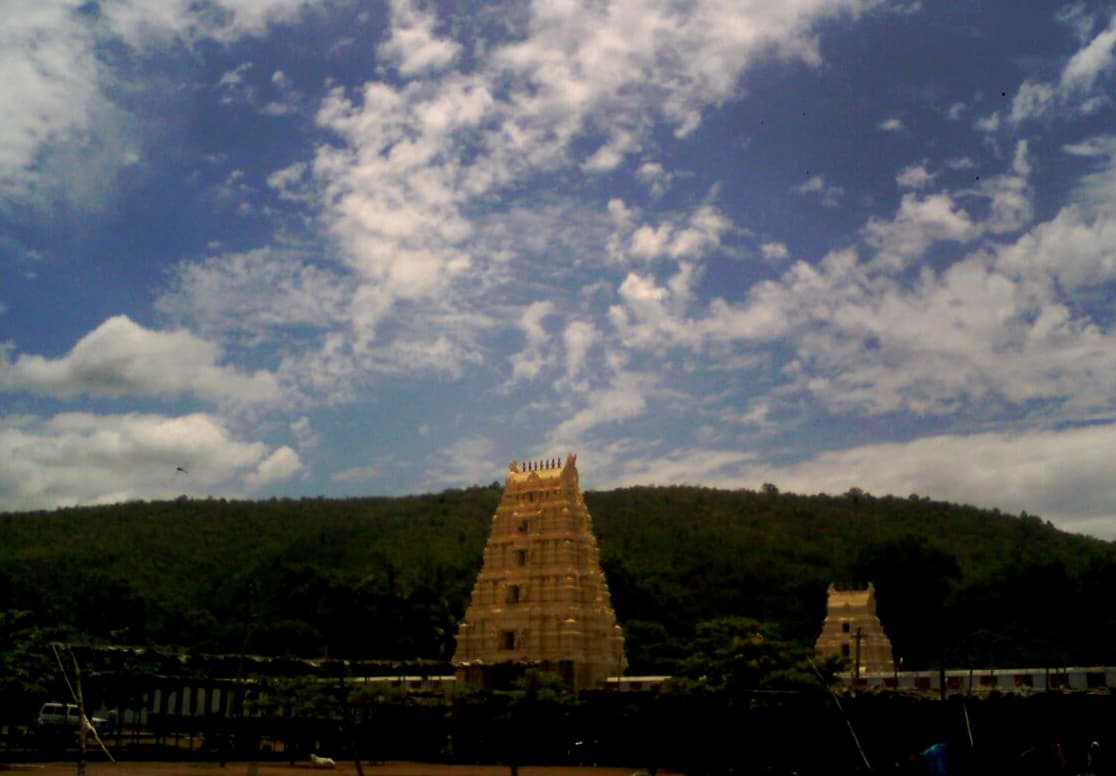
A dramatic hilltop Shiva temple on three rocky peaks (Trikuta hills) near Narasaraopet. Lord Trikoteswara (Shiva of three peaks) is enshrined here. The three hills represent the three eyes of Shiva. Famous for the Shivaratri festival when lakhs of pilgrims climb the 700 steps to seek blessings.
A historic Shiva temple near the Godavari river, associated with one of the Pancharama cluster. Lord Bhimeshwara is enshrined here on the scenic banks. During the Godavari Pushkaralu (once in 12 years), Kotipalli receives millions of pilgrims.
The Pancharama Ksheerarama shrine, where the Shiva lingam is believed to have emerged from a pot of milk (ksheera) during the splitting of a cosmic lingam by Vishnu's discus. Set amid the paddy fields of the Godavari delta, it also houses a shrine to Parvati as Ksheera Rameswari.
A Pancharama shrine dedicated to Lord Bhimeshwara, one of five temples enshrining a single Shiva lingam said to have been split by Lord Vishnu's discus. It features a 30-metre gopuram and a sacred pond, Kumara Pushkarini, whose waters are believed to have healing properties.
A major Shiva temple famous for its natural 'Navakundam' — nine sacred springs that flow perpetually around the sanctum and are never known to dry up. Lord Mahanandiswara (Shiva as the great Nandi/bull lord) is the presiding deity. The tank around the temple is fed by these springs.
A Jyotirlinga shrine of Lord Shiva that is also one of the eighteen Shakti Peethas — a rare dual distinction — set on the Nallamala hills overlooking the Krishna River. Its fortified stone walls and sculpted gopuram reflect centuries of patronage from South Indian dynasties, including the Vijayanagara and Reddy kings.
An ancient Shiva temple in the Godavari delta region where Rama is said to have worshipped Shiva (hence Ramalingeswara). Part of the sacred Godavari pilgrimage circuit. The local tradition holds that Rama installed the lingam here during his search for Sita.
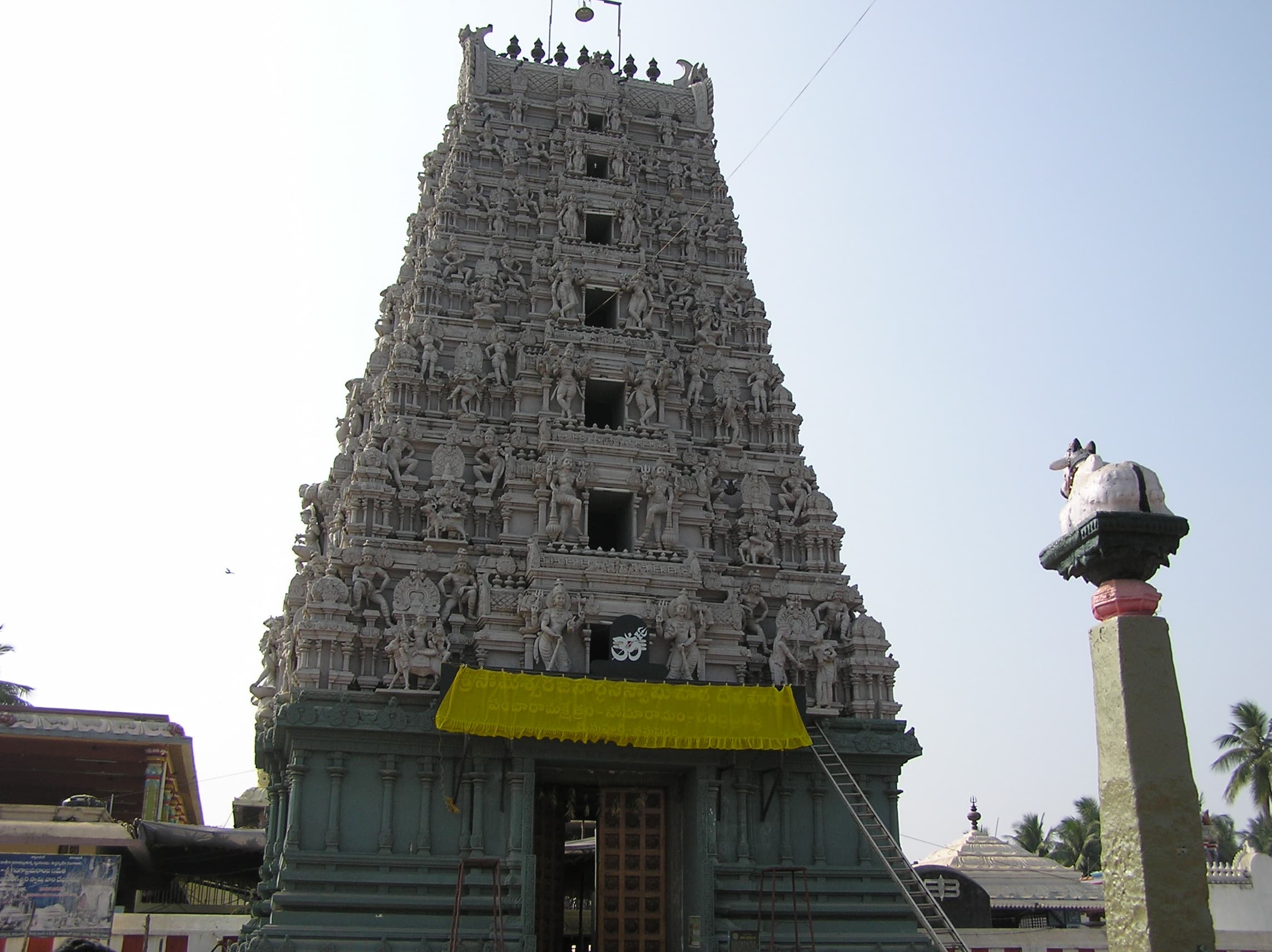
A Pancharama Kshetra where Lord Shiva is worshipped as Somarama, associated with the moon god Chandra, who legend says worshipped here to regain his lost lustre after a curse. The temple is known for its twin Shiva lingams, installed side by side in the sanctum, said to grow slightly larger over time.
A historic Shiva temple revered as the 'Vayu' (air) shrine among the Pancha Bhoota Sthalams, where the sanctum's lamp flame is said to flicker constantly despite no perceptible breeze. It is also a major centre for Rahu-Ketu poojas, drawing pilgrims from across South India seeking relief from serpent-related doshas.
A masterpiece of Kalinga architecture — three 9th–10th century CE Shiva temples built by the Eastern Ganga kings on the banks of the Vamsadhara river. The Mukhalingeswara, Somesvara, and Bhimeswara temples have extraordinary sculptural detail. Often called the 'Konark of Andhra Pradesh'.
A cave temple dedicated to Lord Shiva and Goddess Parvati, set in a dramatic rocky landscape in Kurnool district. Famous for a naturally growing Nandi (Shiva's bull) statue and a perpetually flowing underground spring. Believed to be 5,000 years old.