By Deity
By State
14 temples across South India.
Shiva
A group of four remarkable cave temples (3 Hindu + 1 Jain) carved into red sandstone cliffs by the Chalukya kings (6th century CE). Cave 3 contains a stunning 18-armed Vishnu Trivikrama sculpture. A UNESCO World Heritage Site and one of the finest examples of early Deccan rock-cut architecture.
A famous Bangalore temple housing one of the largest monolithic Nandi (Shiva's sacred bull) statues in the world — 4.5 metres tall and 6 metres long, carved from a single granite rock. Built by Kempe Gowda I (founder of Bangalore) in the 16th century. The annual Kadalekayi Parishe (groundnut fair) here is one of Bangalore's most beloved folk festivals.
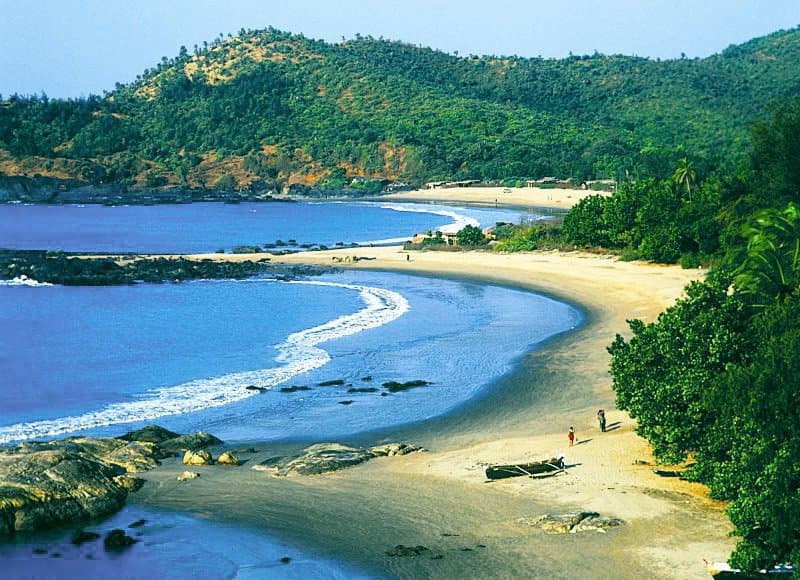
One of the seven Mukti Kshetras of India (sacred liberation sites), dedicated to Lord Mahabaleshwara (Great Shiva). The Atmalinga (Shiva's soul-lingam brought by Ravana) is the most sacred object here — Ganesha tricked Ravana into placing it here permanently. A major pilgrimage centre where devotees take a ritual bath in the sea before worshipping.
The largest Hoysala temple, dedicated to Lord Shiva as Hoysaleshwara and Shanthhaleshwara. The entire outer wall is covered with an extraordinary 240-metre frieze of animals, mythological scenes, and intricate carvings. A UNESCO World Heritage Site (2023) just 16 km from Belur.
One of the oldest temples in Mangalore (9th century CE), built by the Alupa dynasty. Houses the largest bronze idol of Lokeshwara (Avalokitesvara) in India — a 5-foot Buddhist bronze from the 10th century CE, indicating the temple's Buddhist origins. The Nath Panth tradition of tantra yoga has its roots here.
The birthplace of Basavanna (1131–1196 CE) — the great saint-philosopher who founded the Lingayat tradition and campaigned against caste discrimination. Located at the confluence of the Krishna and Malaprabha rivers. The Basavanna samadhi (shrine) here is the most sacred site for 10 million Lingayat devotees worldwide.
One of the most important temples in Mangalore, built by social reformer Narayana Guru in 1912 to provide a temple for all castes. Lord Gokarnanatha (a form of Shiva as Lord of Gokarna) is the presiding deity. The nine-day Navaratri festival here includes spectacular cultural events and draws 5 lakh visitors.
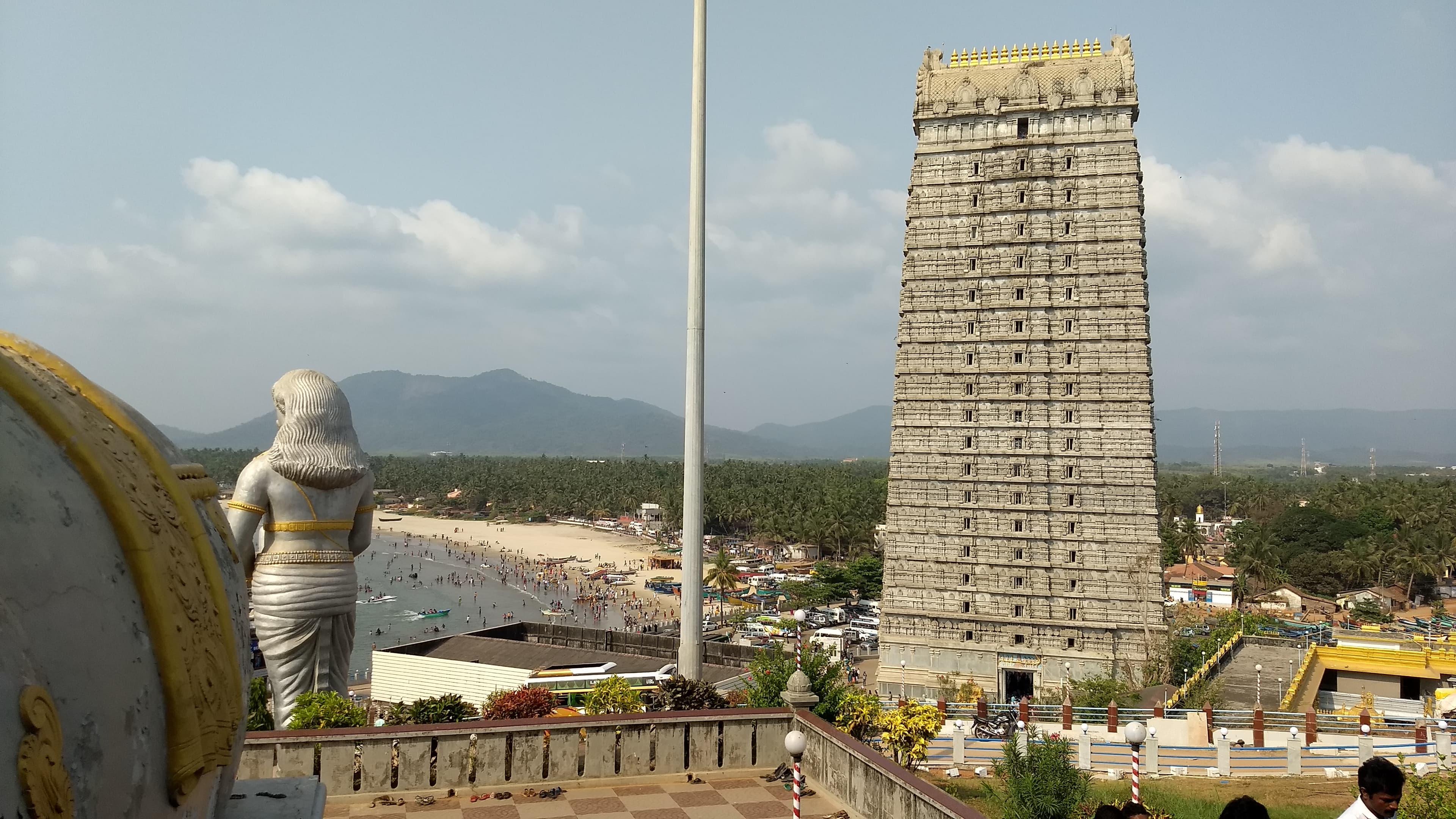
A coastal Shiva temple on the Arabian Sea in Karnataka, overlooked by one of the world's tallest Shiva statues, standing around 123 feet high. Its hilltop location on Kanduka Hill, surrounded by water on three sides, makes it one of the state's most photographed pilgrimage spots.
One of the most important Shiva temples in Karnataka, located on the banks of the Kabini river. Lord Srikanteshwara (Shiva with a blue throat) is the tutelary deity of the Mysuru region. Famous for the Nanjangud Banana (Nanjangud Rasabale), a GI-tagged rare variety of banana grown only near the temple.
A UNESCO World Heritage Site with 10 major temples representing the peak of Chalukya architectural achievement (7th–8th century CE). The Virupaksha Temple here (also called Lokeswara) was the model for the Kailasa Temple at Ellora. Pattadakal, Badami, and Aihole together form the 'Cradle of Hindu Architecture'.
A 500-year-old Shaiva Math (monastery) near Tumkur, associated with the late centenarian saint H.H. Sivakumara Swami (1907–2019) who ran a school, college, and free meals for thousands daily. The Math combines education, social service, and Shiva devotion. After the saint's samadhi here, it has become a major pilgrimage.
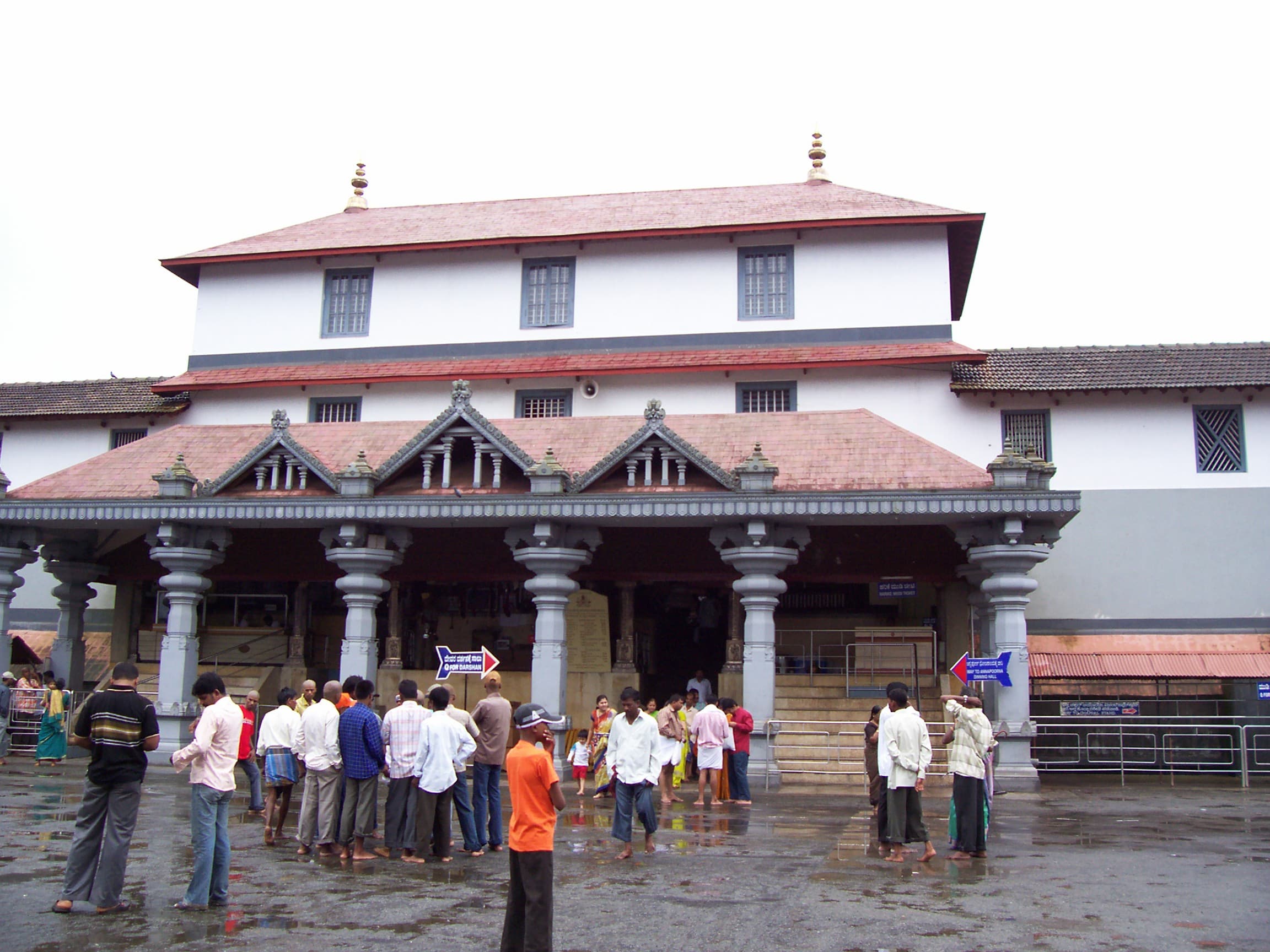
A unique Shaivite temple traditionally administered by a Vaishnava family, the Heggades, reflecting the region's long tradition of religious harmony. It is famed for its annadana service, feeding over 10,000 pilgrims daily, making it one of the most-visited temples in Karnataka.
Five ancient Shiva temples (Panchalinga — Vaidyanatha, Pathaleshwara, Maruleshwara, Arkeshwara, Kirtinarayana) half-buried in sand dunes beside the Cauvery river — an extraordinary and eerie landscape. The famous Panchaling Darshana (viewing all five) once in 12 years during the Teerthavari festival draws 3 million pilgrims.
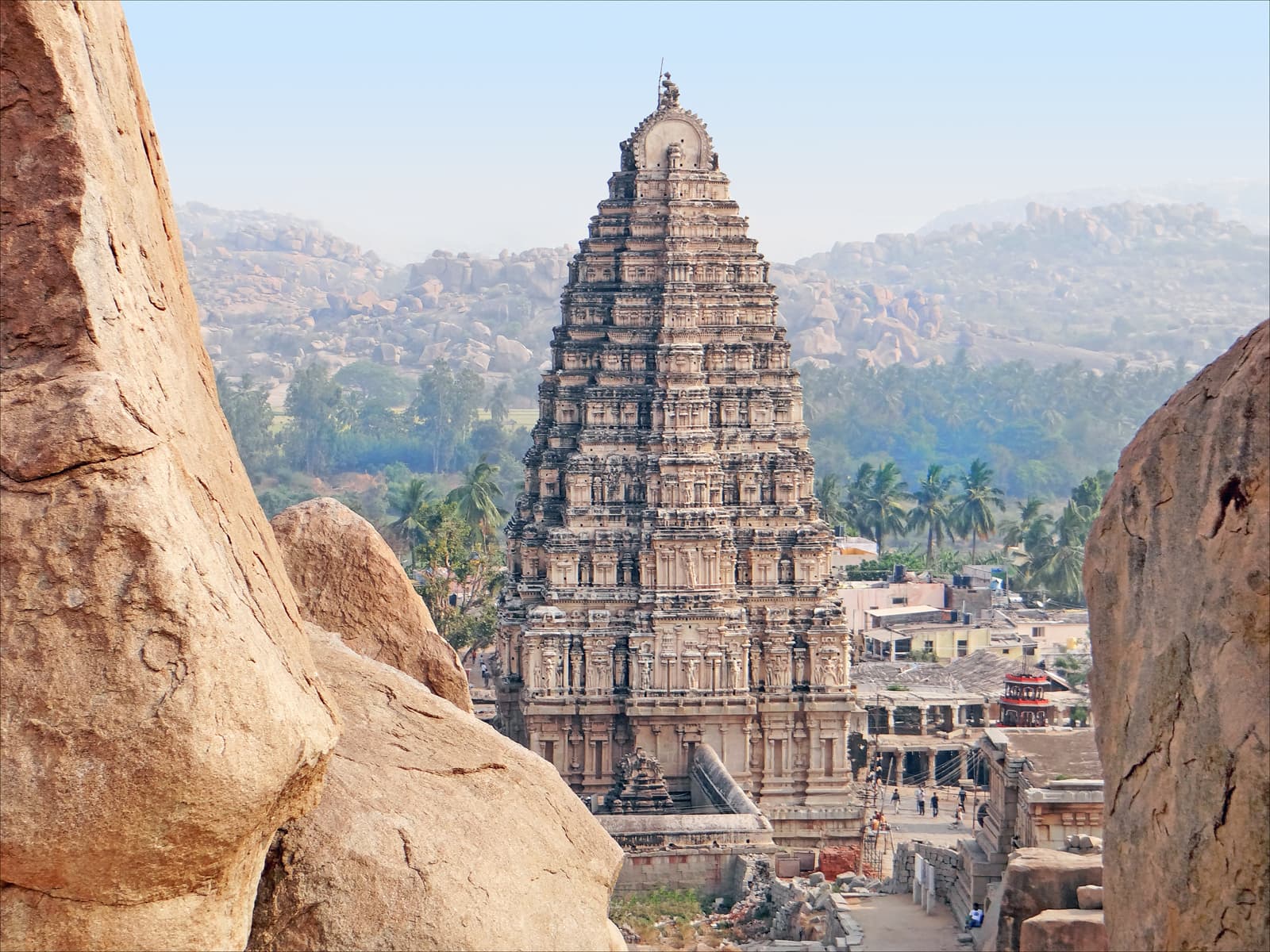
A UNESCO World Heritage Shiva temple at the heart of the Hampi ruins, the former capital of the Vijayanagara Empire, and one of the oldest continuously functioning temples in India. Its 50-metre gopuram dominates the ancient city's skyline, and a pinhole-camera effect — an inverted shadow of the tower cast inside a dark chamber — is a celebrated architectural curiosity.